El Raval sits on the western side of La Rambla, directly opposite the Gothic Quarter, and it is the district visitors are most often told to avoid and least often given a reason for. The reasons that exist are real but narrower than the reputation suggests, and what they obscure is the most interesting and least polished part of the old city. Here is what is actually there.
What kind of place this is
For centuries Raval was the poorest quarter inside the city walls, home to industry, the docks and the trades that the respectable city preferred not to look at. Its lower end, towards the port, carried a reputation for vice that gave it a nickname the city has spent decades trying to shed.
What it became in the last thirty years is the most ethnically mixed district in central Barcelona and the location of a deliberate cultural regeneration, anchored by a contemporary art museum dropped into the middle of it. Both those things are visible on the street at once, which is exactly what makes it interesting.
It is not a monumental neighbourhood. If you want cathedrals and Roman walls, they are across La Rambla and our guide to the Gothic Quarter and El Born covers them. This is a working district.
The museums, and the plaza
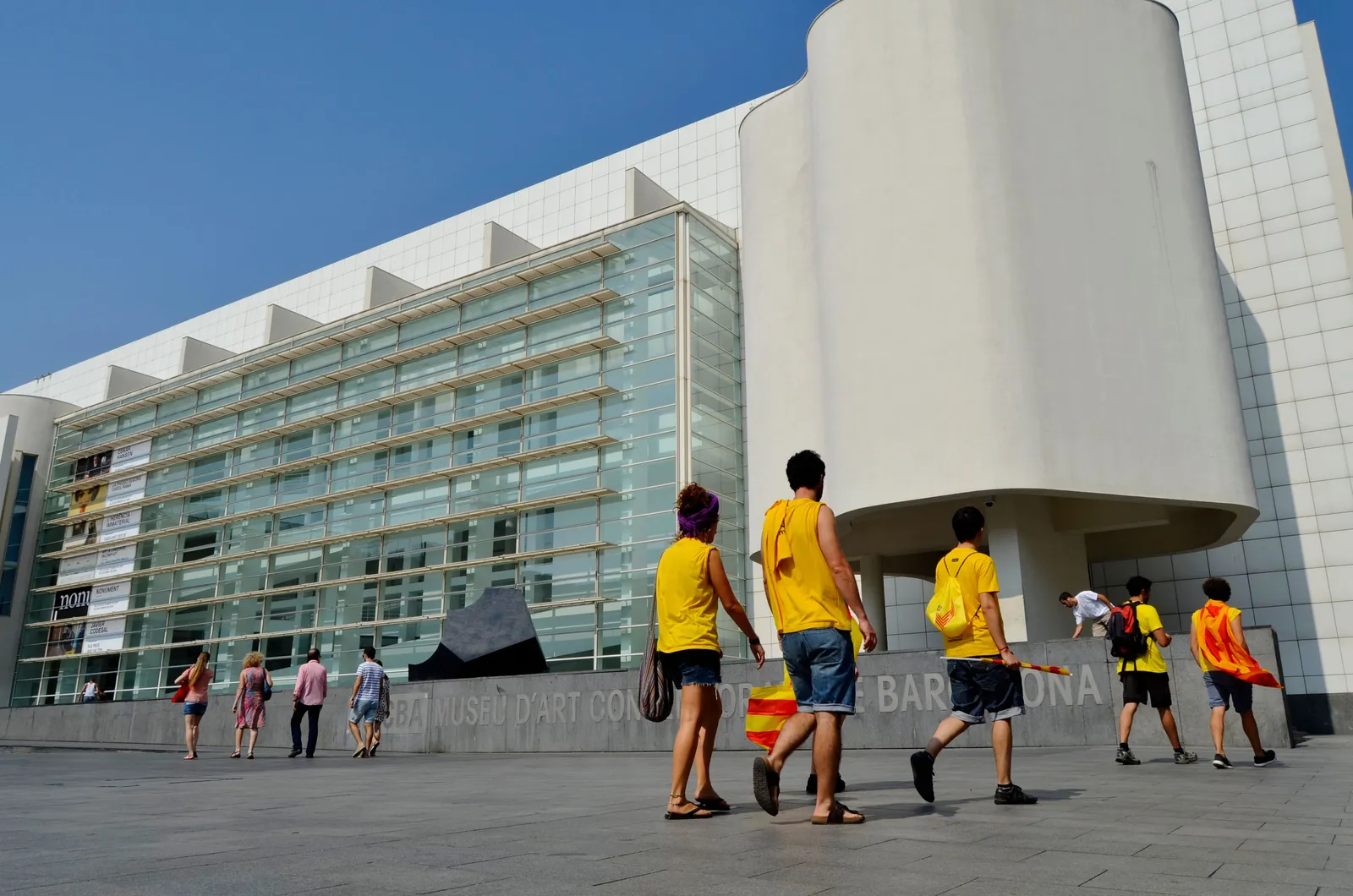
MACBA, the contemporary art museum, is a large white modernist building that looks like it was inserted into the district with a spoon, which it more or less was. The collection is worth an afternoon.
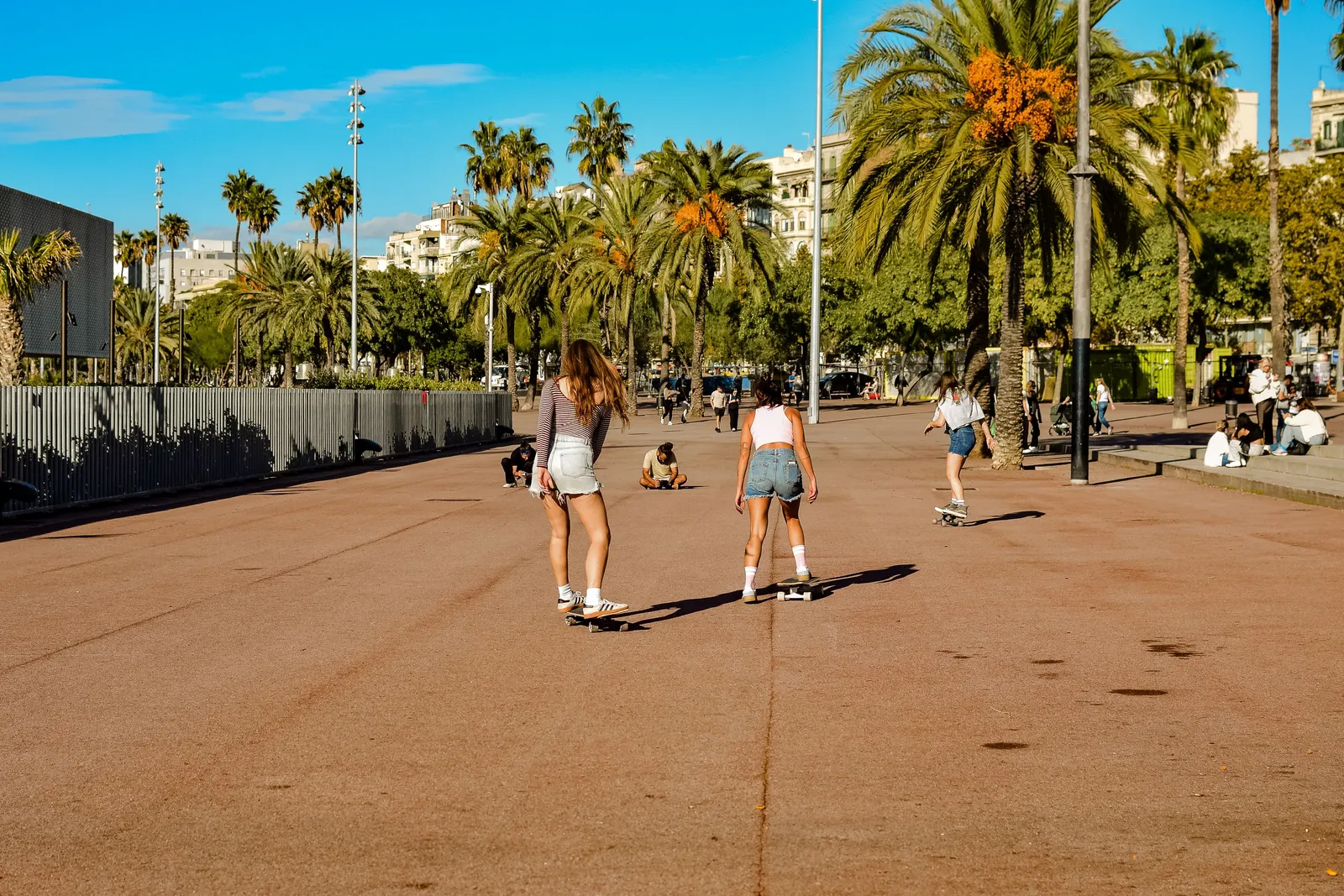
The plaza in front of it may be more famous than the museum. Its smooth expanse of pavement and low walls has been one of Europe’s best-known skateboarding spots for decades, and it is busy from morning until late with skaters, spectators and the general life of the neighbourhood. It is free, and it is one of the better places in Barcelona to simply sit.
Next door, the CCCB occupies a converted almshouse and runs consistently interesting exhibitions on cities, media and contemporary culture.
The old things nobody visits
Two buildings in Raval are considerably older than anything the district is known for.
Palau Guell, just off La Rambla, is an early commission by Gaudi for his patron Eusebi Guell, built in the 1880s and UNESCO listed. It is nothing like the later work: dark, dense and almost gothic, built around an extraordinary parabolic central hall, with a roof terrace of decorated chimneys that shows where he was heading. It is also far quieter than his famous buildings, which is a substantial advantage.
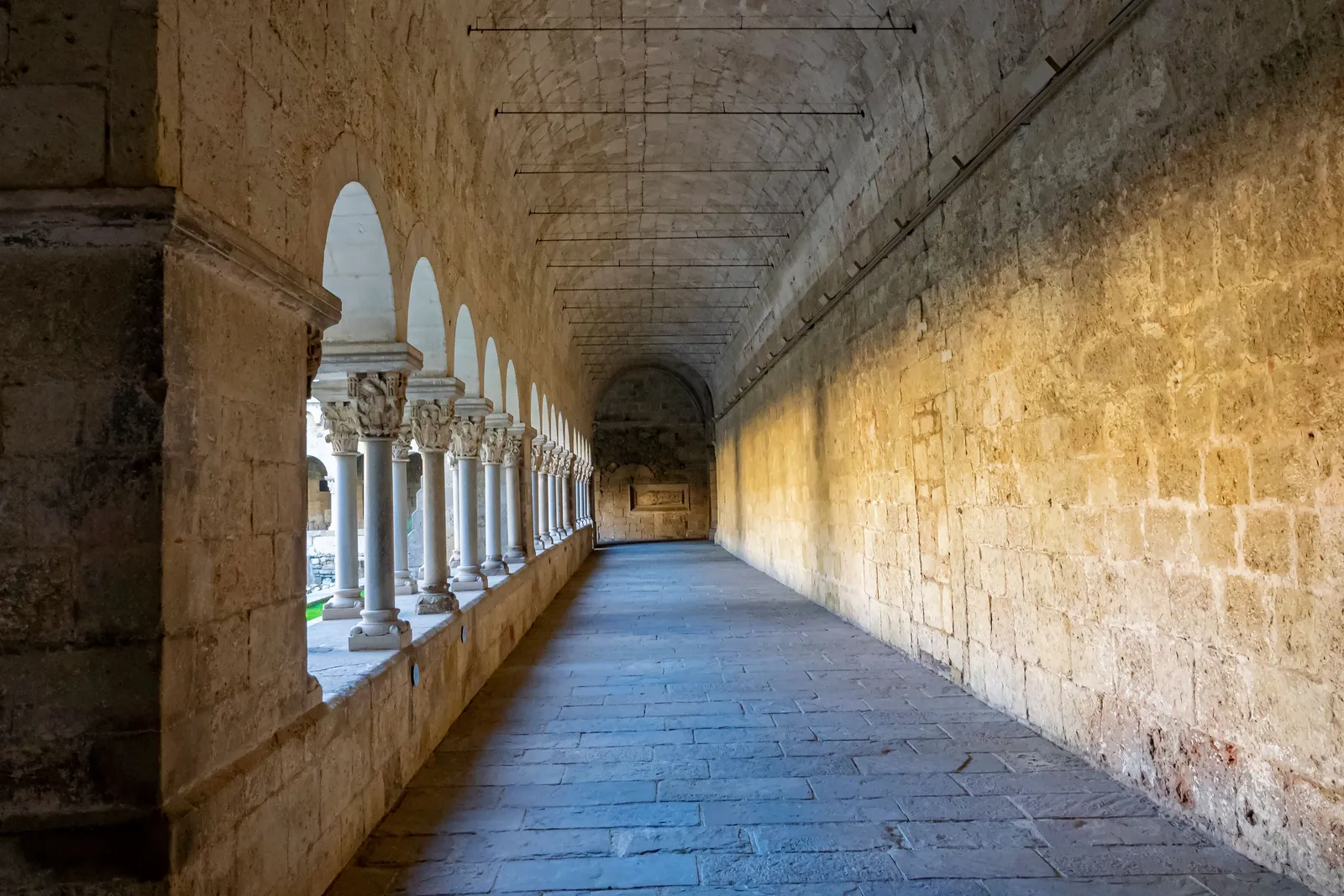
Sant Pau del Camp is the oldest church in Barcelona, a small Romanesque building with a tiny cloister, sitting improbably among apartment blocks. It takes twenty minutes and almost nobody goes.
Eating, and the vintage street
This is the best value eating in the old city and the most varied. Pakistani, Bangladeshi, Filipino and North African kitchens sit alongside old Catalan bars, concentrated around Carrer de Joaquin Costa and the Rambla del Raval, the wide palm-lined street cut through the district in a clearance project. The bronze cat sculpture on it, by Fernando Botero, has become the neighbourhood’s unofficial mascot.
Carrer de la Riera Baixa is the city’s vintage and second-hand street, a short run of shops selling used clothing, records and streetwear, with more in the surrounding lanes. It opens late and is quiet in the mornings.
Just beyond the district’s western edge, the restored market and the bar scene around it are covered in our guide to Sant Antoni, which makes a natural continuation of a Raval afternoon.
The district rewards someone explaining itA walking tour of Raval covers the layers of the neighbourhood that the buildings alone do not tell youThe honest word on safety
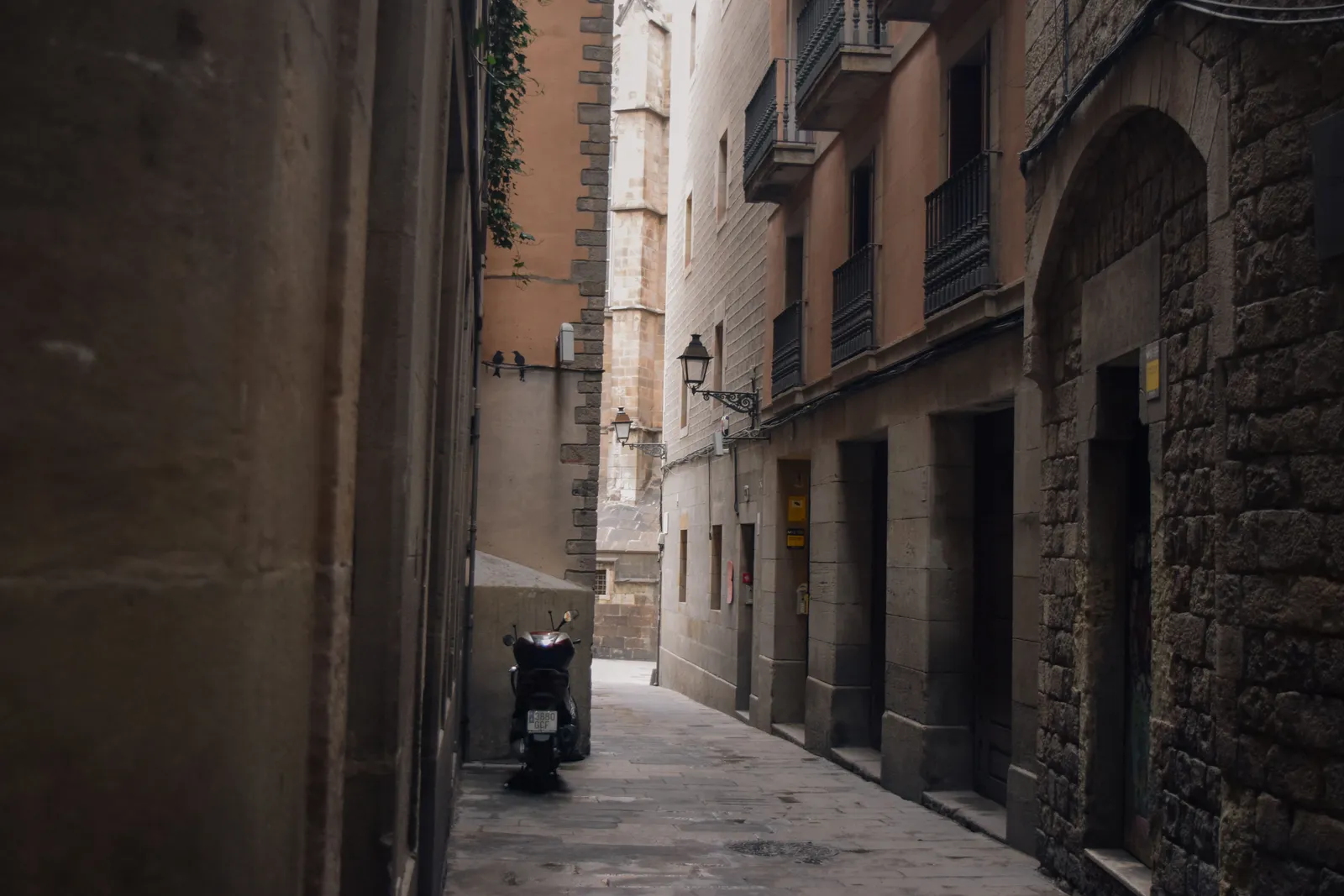
The reputation is not invented, and it is also not the whole district. Raval has a higher rate of pickpocketing and street crime than most of Barcelona, and it concentrates in the lower part towards the port and in the narrow lanes after dark.
The practical version: the main streets and the museum plaza are busy and entirely ordinary during the day, and the tens of thousands of people who visit MACBA each year are not taking a risk by doing so. At night, stay on streets that have people on them, keep valuables secured, and treat the quiet lanes in the lower half with more caution than you would elsewhere in the centre. That is ordinary city sense rather than a special protocol.
Where it fits
Raval is not a first-day neighbourhood. On a short trip, the Gaudi buildings and the old city come first, and our guide to Barcelona’s neighbourhoods sets the order. On a longer stay, or a second visit, or an afternoon when you have had enough of queueing behind other visitors, it is the most rewarding walk in the centre and the one where you are most likely to end up somewhere you did not plan to be.