On 20 February 2026 the final section of a steel and glass cross was fixed to the top of the central tower of the Sagrada Família, and the basilica reached its full designed height for the first time in its 144 year construction. Within days the story had travelled the world under a headline that was not true: that the Sagrada Família was finished. It is not. Understanding exactly what changed in 2026, and what did not, is the difference between arriving with accurate expectations and arriving confused about why there is still a building site at one end.
What actually happened in 2026
The Tower of Jesus Christ is the tallest of the basilica’s eighteen towers, the central one, rising above the six that form the core of the silhouette. Its exterior was completed in February 2026 with the installation of the upper arm of a monumental cross, an object of steel and glass weighing close to a hundred tonnes, its glass panes designed to catch and scatter daylight.
The completed height is approximately 172.5 metres, which makes the Sagrada Família the tallest church building in the world. The figure was not arbitrary. Gaudí set the height deliberately below the nearby hill of Montjuïc, on the principle that nothing built by human hands should stand higher than the work of God.
The timing was equally deliberate. Antoni Gaudí died on 10 June 1926, and 2026 marked the centenary of his death. The tower was inaugurated in a ceremony on 10 June 2026, exactly a hundred years on.
Why the building is not finished
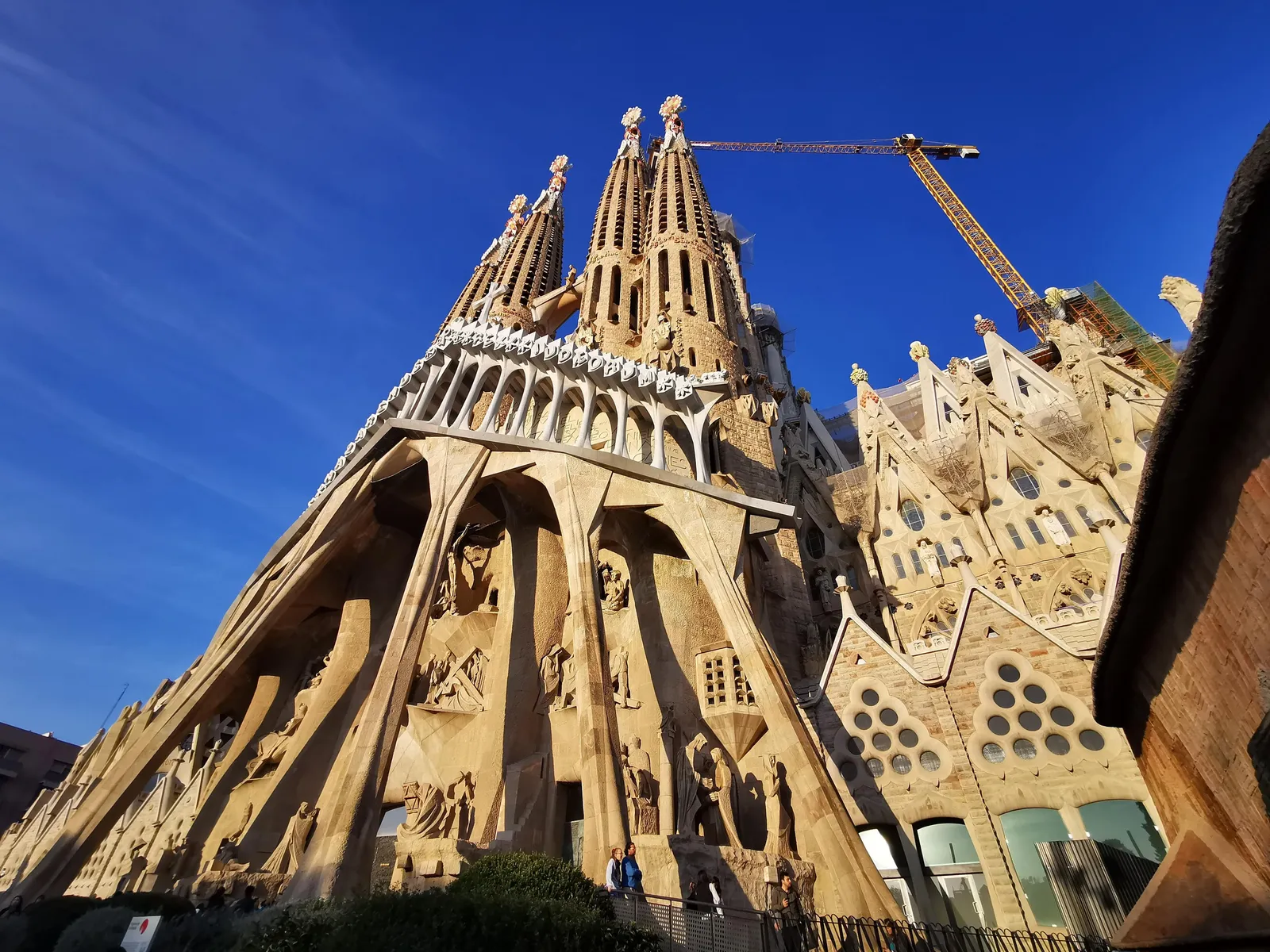
Here is what remains, and it is not trivial. The Glory Façade, the principal entrance and the largest of the three great façades, is structurally under way but nowhere near complete: its sculptural programme, its bronze doors and its full elevation are outstanding. In front of it, the monumental Glòria staircase has not been built at all.
Beyond the building itself, the surrounding urban works, the reshaping of the streets and the space needed for the staircase, are unresolved. The staircase design requires ground currently occupied by an existing block of buildings, and the process affecting those properties has been the subject of long running local dispute. That is not a construction problem, it is a civic one, and it is not obviously closer to resolution than it was a decade ago.
The basilica’s own stated horizon for the remaining work runs to roughly 2034 to 2035. Treat that as an estimate. This is a building that has revised its completion date repeatedly for over a century.
What you can and cannot visit
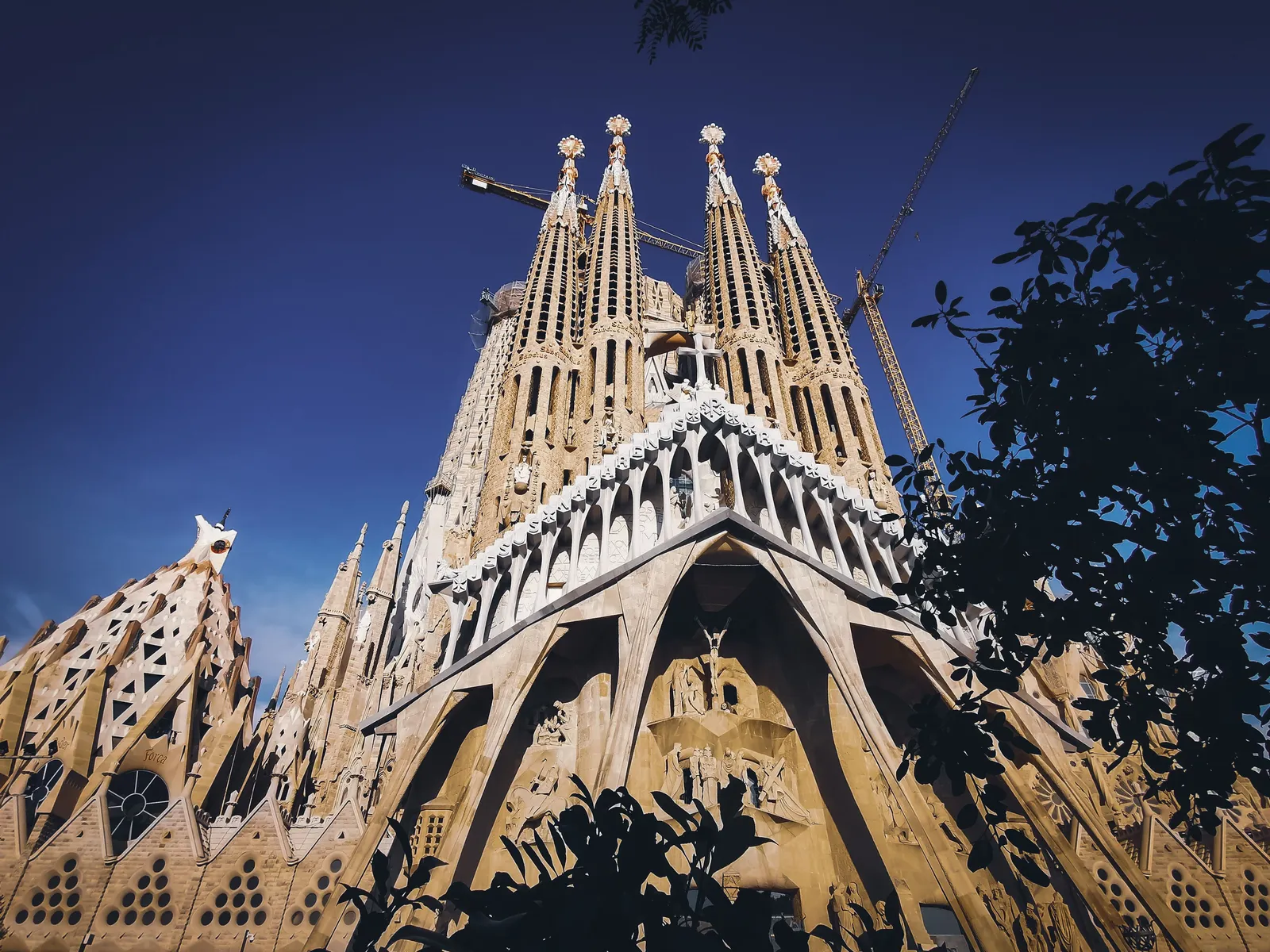
The practical question for a visitor is whether the new tower is something you can go up. As of the time of writing, no. Tower access at the Sagrada Família is by lift into either the Nativity tower or the Passion tower, with the descent on a narrow spiral staircase in both cases. Those two remain the options on a tower ticket, and they are chosen for aspect: Nativity faces east and is better in the morning, Passion faces west and takes the afternoon light.
A visitor platform inside the central tower has been announced, with an opening indicated from 2027. Interior fitting out has been running and dates at this building move, so the only reliable answer is what appears as bookable on the official ticketing page on the day you look. Our guide to whether the tower climb is worth the extra covers what you actually get from each of the two currently open towers.
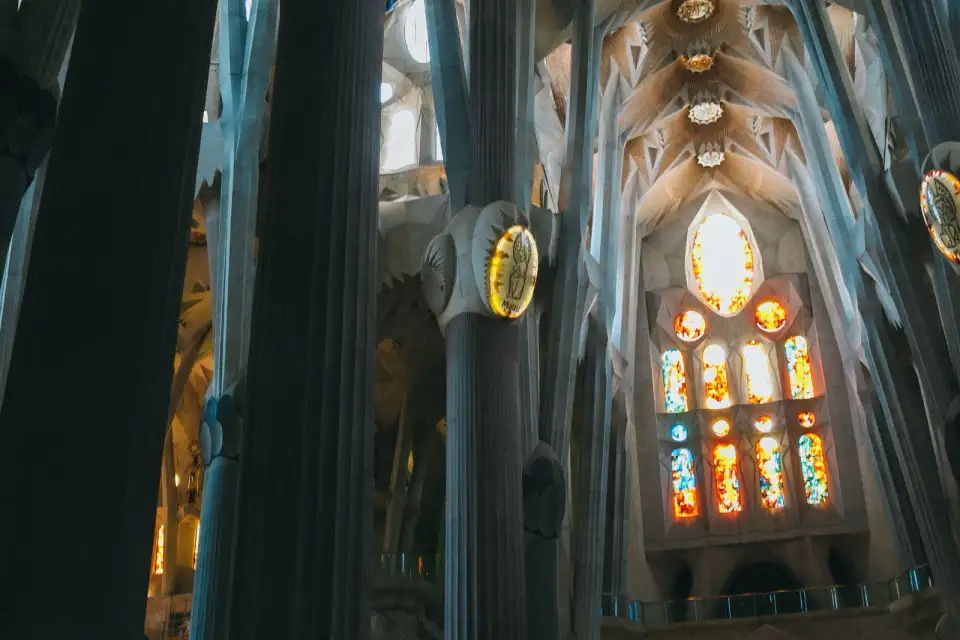
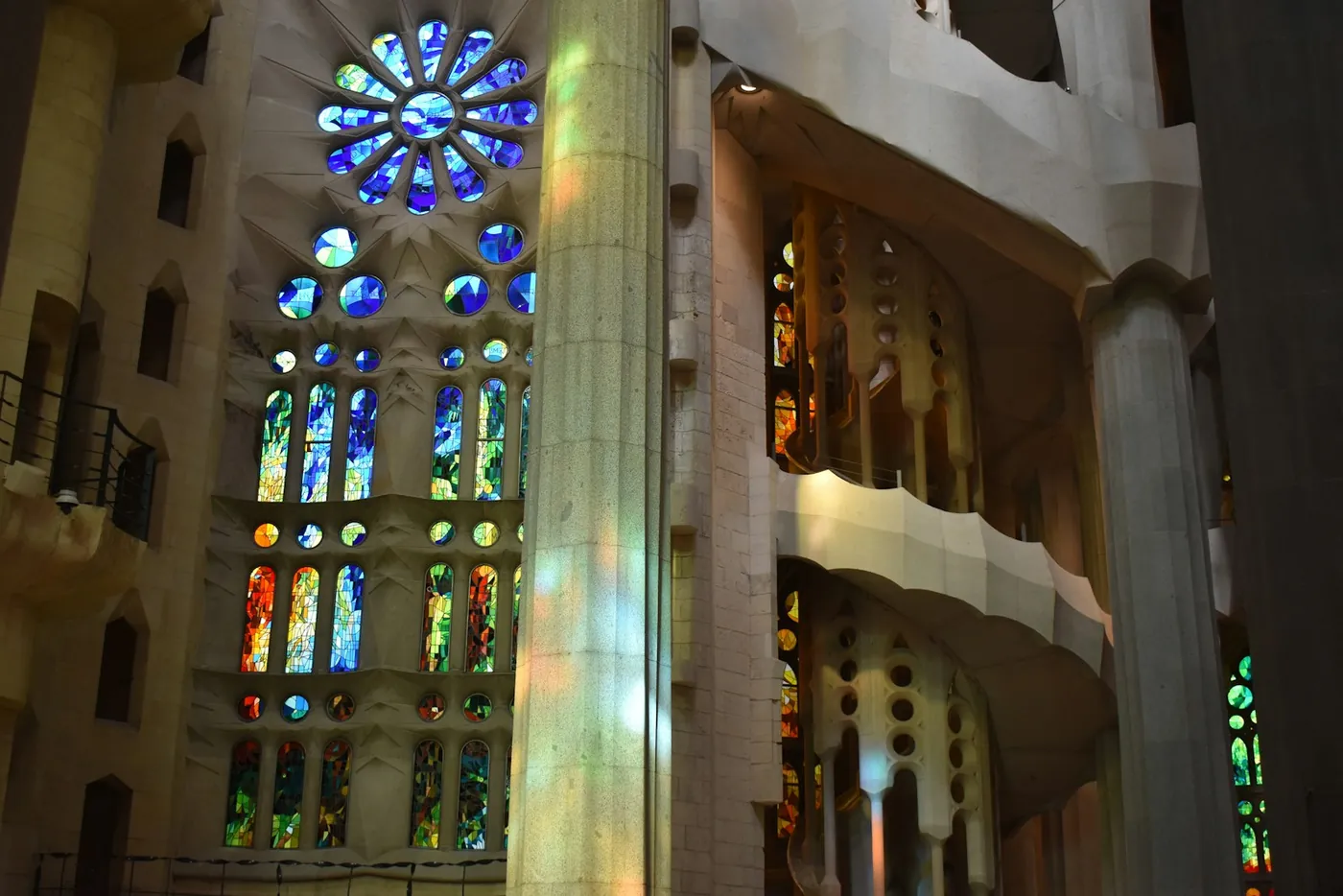
Everything else about a visit is as it was. The interior, the forest of branching columns and the coloured light through the nave, has been essentially complete for years and is unchanged. Ticketing, timed entry and the queueing situation are covered in our full guide to visiting the basilica.
Understand what you are looking atA guided visit explains which parts are Gaudí, which are later, and which are still to comeThe centenary programme, and why dates keep moving
A dedicated centenary programme ran through 2026 across sites associated with Gaudí, with exhibitions, special openings and events clustered around the June anniversary. Some elements were ticketed separately, some were included with ordinary admission, and several dates shifted during the year.
This is worth saying plainly: any listing of centenary events published early in 2026 is unlikely to be accurate now. Check the official basilica website and the dedicated centenary site for what is currently running before building a day around a specific exhibition.
What is genuinely different, and the rest of Gaudí’s work
Strip away the headlines and one real change stands out. For the first time, the exterior silhouette is complete. Anyone who visited in the last few decades saw a building with a gap where the central tower should be, cranes filling the skyline and a shape that could only be imagined. That is gone. What you see from the surrounding streets now is the building as designed.
That matters most from a distance. The viewpoints across the city, the rooftops of the Eixample, and the approach along the avenues all now show a complete profile. If you have visited before, that is the thing worth going back for.
What has not changed is the west end. Approach from the Glory side and you are looking at a construction site behind hoardings. Both things are true at once, and the coverage that flattened them into “finished” did visitors no favours.
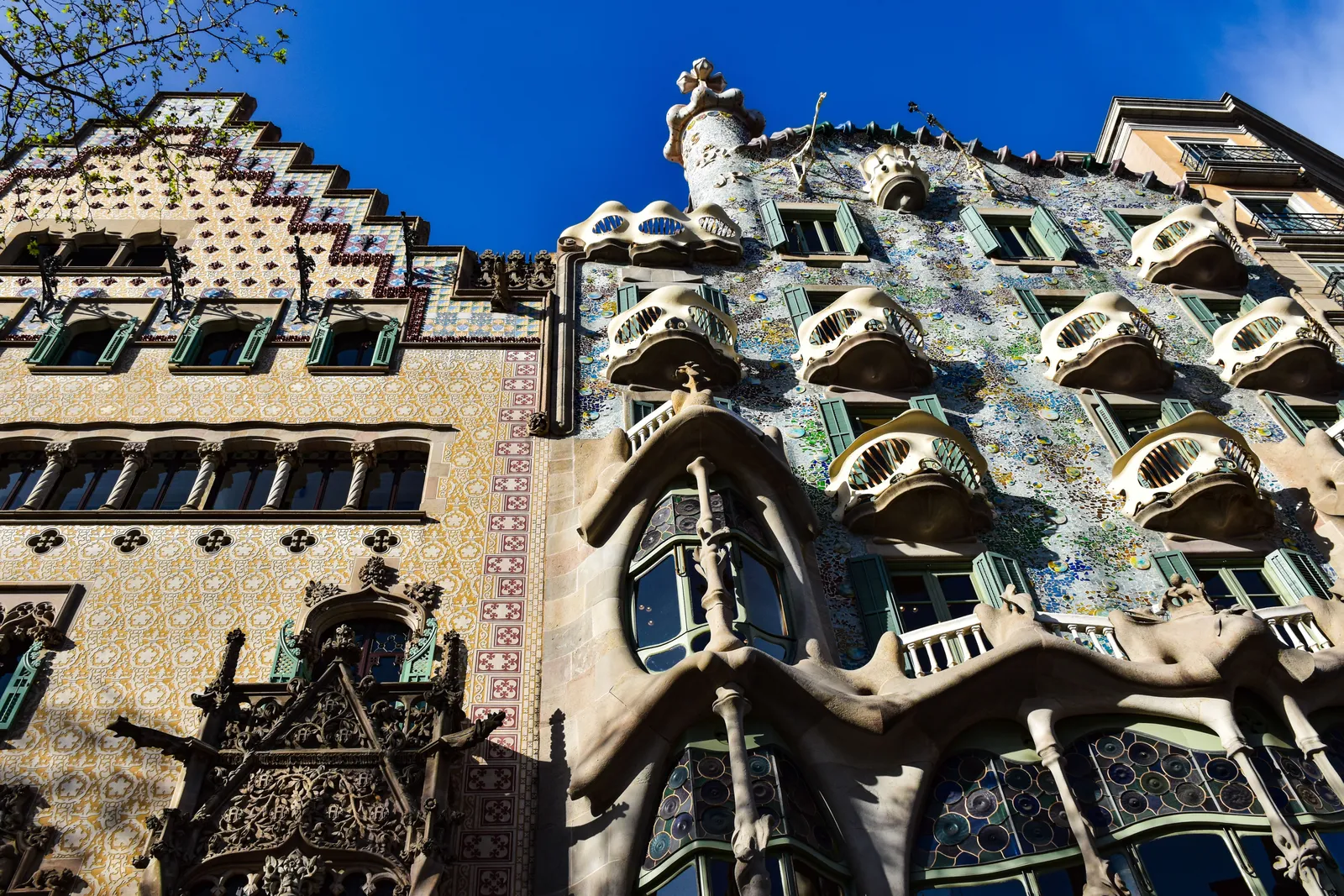
The anniversary is a reason to look beyond the basilica. Gaudí’s built work in and around Barcelona spans houses, a park, a crypt, a colony church and unfinished projects, and 2026 pushed several of them into wider public attention than usual. Some sites ran special programming, some extended opening arrangements, and interest at the better known houses rose accordingly.
If the centenary is your reason for coming, the honest recommendation is not to spend the whole visit at the Sagrada Família. Our full guide to Gaudí in Barcelona sets out the complete list of sites, which of them justify a ticket, and how to string several into a coherent day without spending it queueing.
The short version
In February 2026 the Sagrada Família topped out at approximately 172.5 metres with the completion of the Tower of Jesus Christ, becoming the tallest church in the world, and the tower was inaugurated on 10 June, a hundred years after Gaudí’s death. The building is not finished. The Glory Façade, the monumental staircase and the surrounding urban works remain outstanding, with an official horizon in the mid 2030s that is an estimate rather than a date, and the land question in front of the basilica is still contested. Tower access still means the Nativity or Passion towers; the central tower platform has been indicated from 2027 but confirm it on the official ticketing page. The genuine change for visitors is the complete exterior silhouette, and it is best appreciated from a distance.