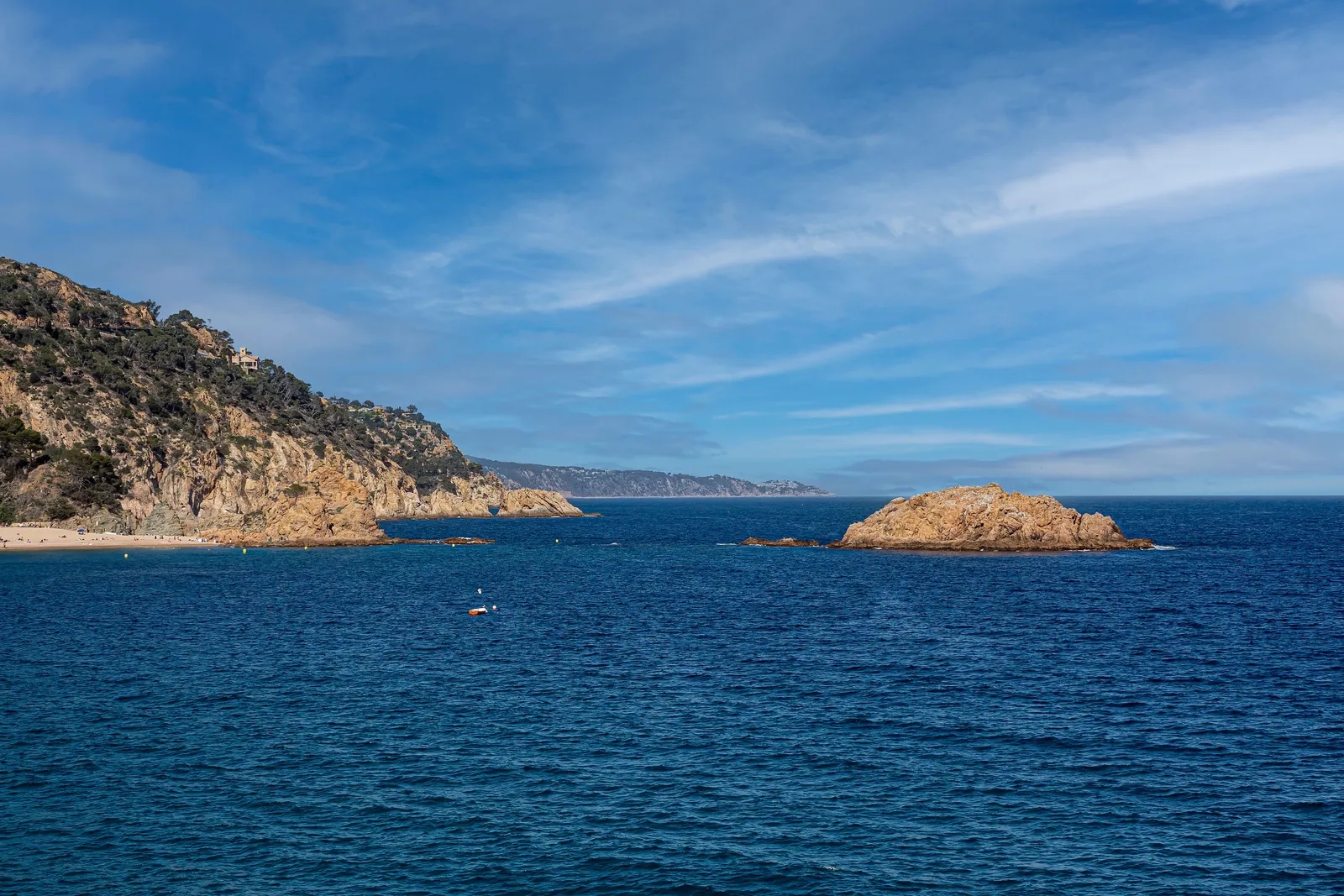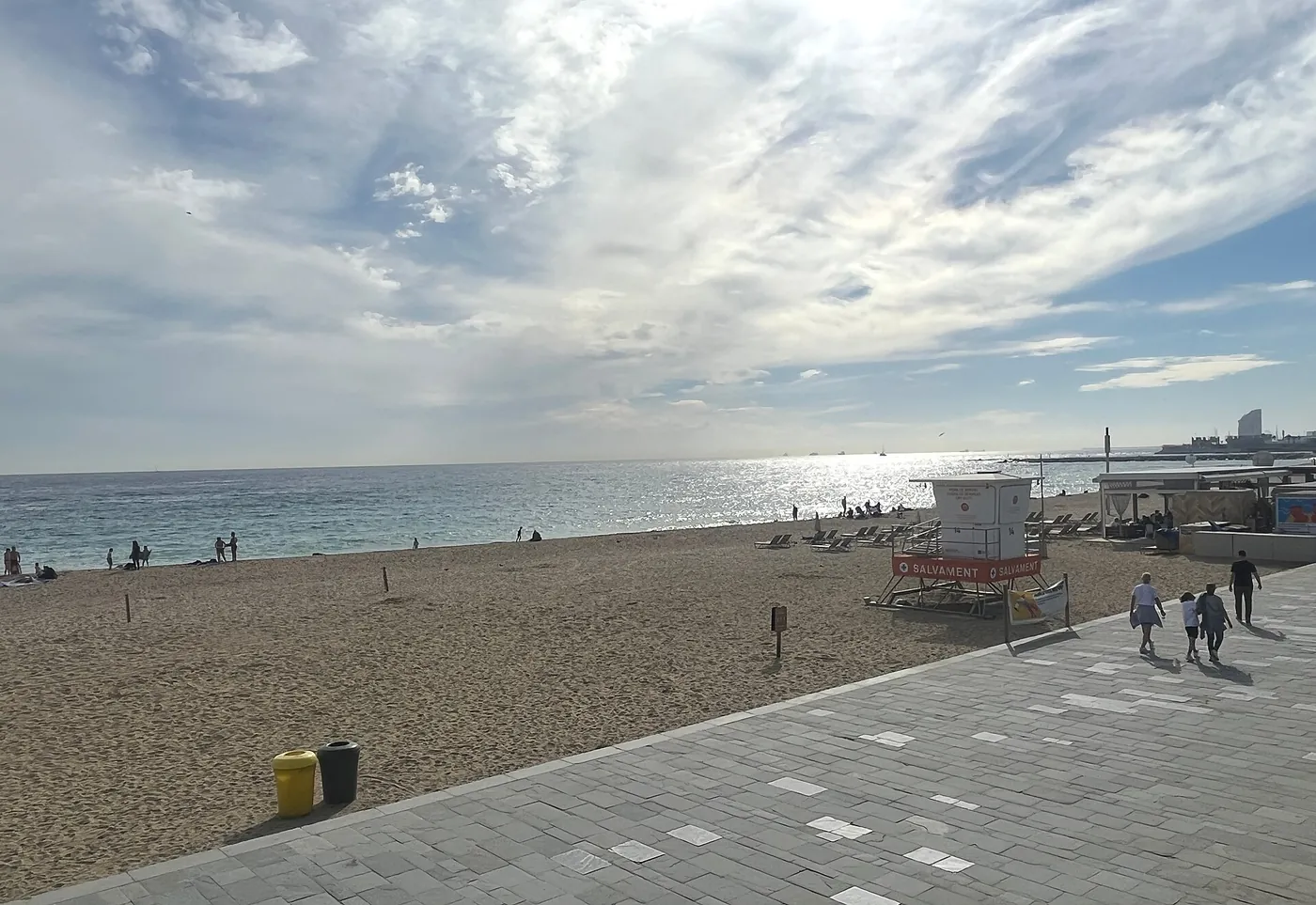
Almost every visitor to Barcelona goes to Barceloneta, and almost every one of them concludes the city’s beaches are crowded. They are, at that specific beach, on that specific stretch. Walk twenty minutes north along the same continuous strip of sand and the experience changes completely. Here is what is up there and how to reach it.
The beaches, in order
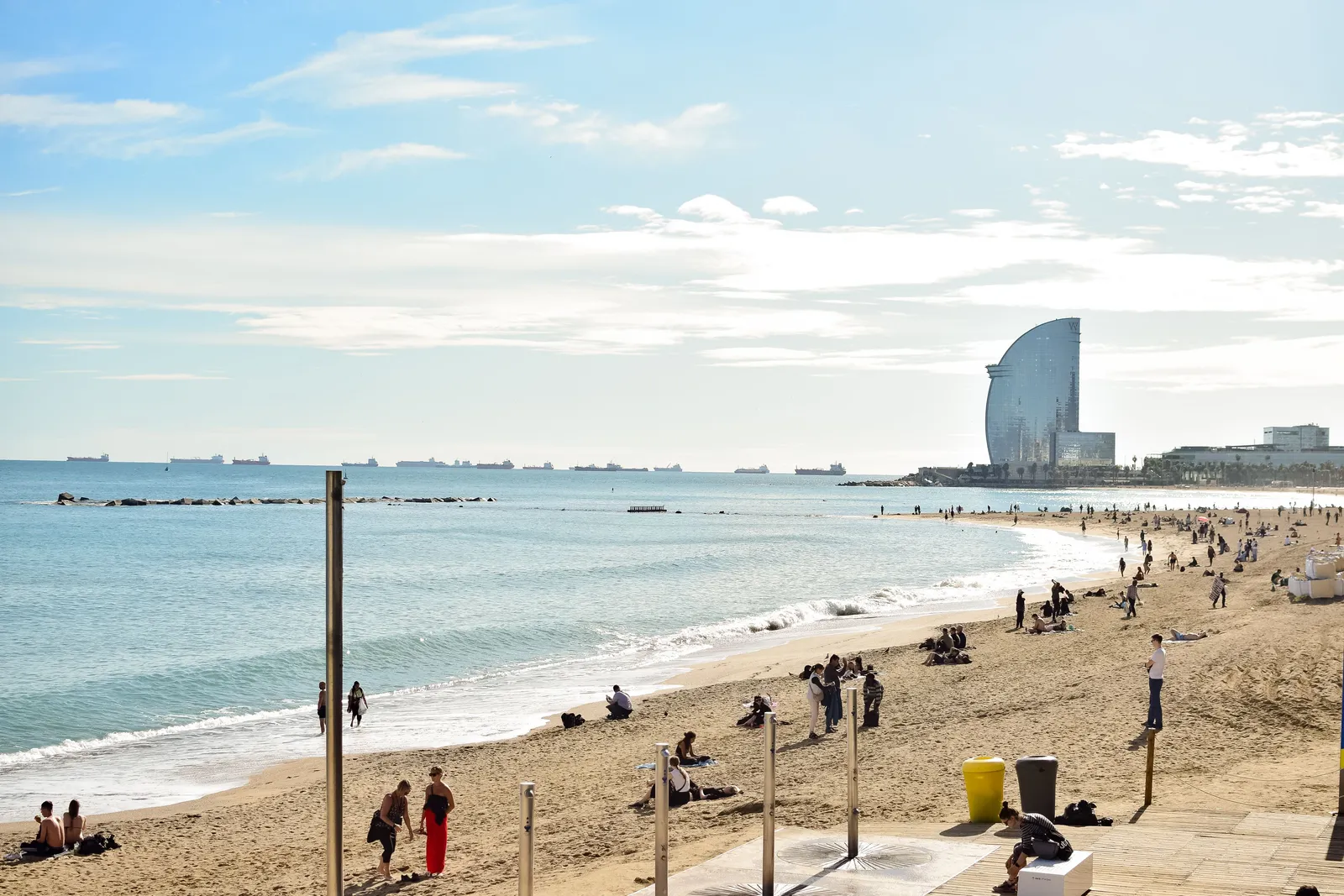
The seafront runs as one continuous strip from the old fishing quarter northeast towards the river, broken into named beaches that shade from very busy to genuinely quiet.
Barceloneta is the first and the famous one, closest to the old city, and our Barceloneta guide covers it properly. It is also the most crowded and the one with the worst reputation for theft.
Nova Icaria comes next, in front of the Olympic port, and is the calmest of the inner beaches and the most family-oriented, with shallow entry and good facilities.
Bogatell is the one to aim for. Far enough out to lose the crush, well provided with showers, lifeguards and beach bars, and used by a mix of residents and visitors rather than by coach parties. For most people this is the best beach in the city.
Mar Bella and Nova Mar Bella are further again, younger in atmosphere, with a designated nudist section at Mar Bella and a sailing base nearby.
Llevant is the last and least developed, at the far end where the city runs out.
Facilities are consistent along the whole strip rather than tailing off with the crowds, which is the thing that makes the northern beaches worth the walk rather than merely emptier. Showers, toilets, lifeguards in season, sun loungers for hire and beach bars run the full length, and the promenade behind carries a separated cycle path the whole way. A blue flag has flown over several of these beaches for years, and the water quality is monitored and published through the season, which is worth checking after heavy rain since storm runoff can close swimming temporarily.
Why they look manufactured
Because they are. Barcelona spent most of its history with its back to the sea, and the waterfront was industrial, walled off and largely inaccessible until the city rebuilt it for the 1992 Olympics. Sand was brought in, the promenade was constructed and the beaches as they exist today were essentially created in a few years.
That explains their regular shape, the excellent promenade and facilities, and the fact that the sand needs replenishing after heavy winter storms. It is one of the most successful pieces of urban redevelopment anywhere in Europe, and it is worth knowing that the thing you are lying on is about as old as the metro station behind it.
Getting there
Two options, both easy.
The metro serves Poblenou, with stations a short walk inland from Bogatell and Mar Bella, roughly twenty minutes from the centre.
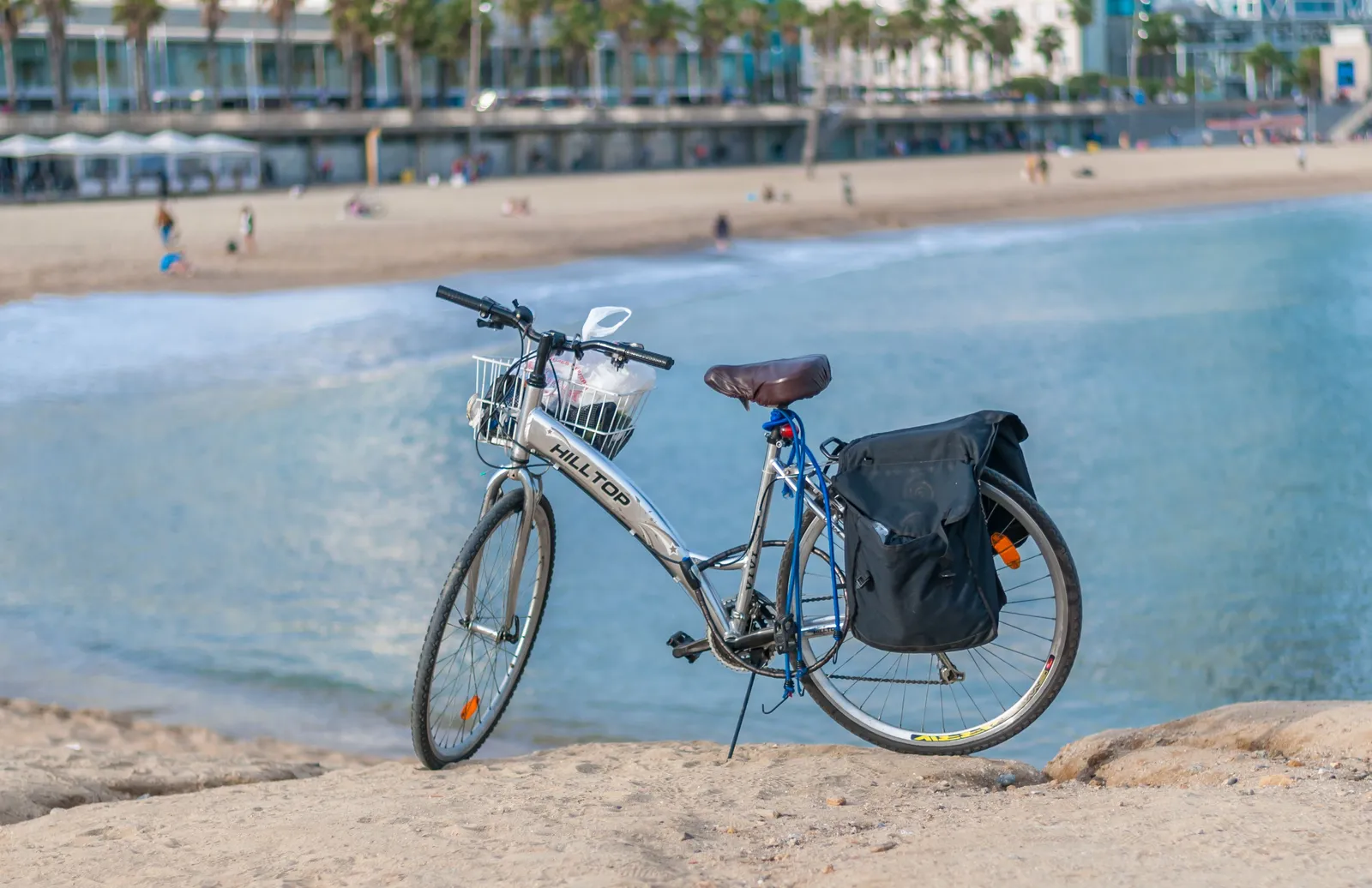
The promenade runs continuously from Barceloneta all the way up, flat and separated from traffic. Walking it takes around half an hour, cycling it takes ten minutes, and it is the better introduction because you see how the whole strip fits together.
Sleeping near the sandPoblenou puts the quieter beaches on your doorstep and is considerably cheaper than the old cityTheft, honestly
Petty theft on the sand is a real problem along the whole Barcelona seafront, and pretending otherwise helps nobody. It concentrates most heavily at Barceloneta, where the crowds are thickest and the turnover of visitors is highest, and it thins out as you go north.
The rule is the same everywhere and it is simple: a bag left unattended while you swim will sometimes not be there when you come back. Take turns in the water, or bring nothing you would mind losing. That is it. It does not require vigilance beyond that, and it should not stop anyone going.
Going further out
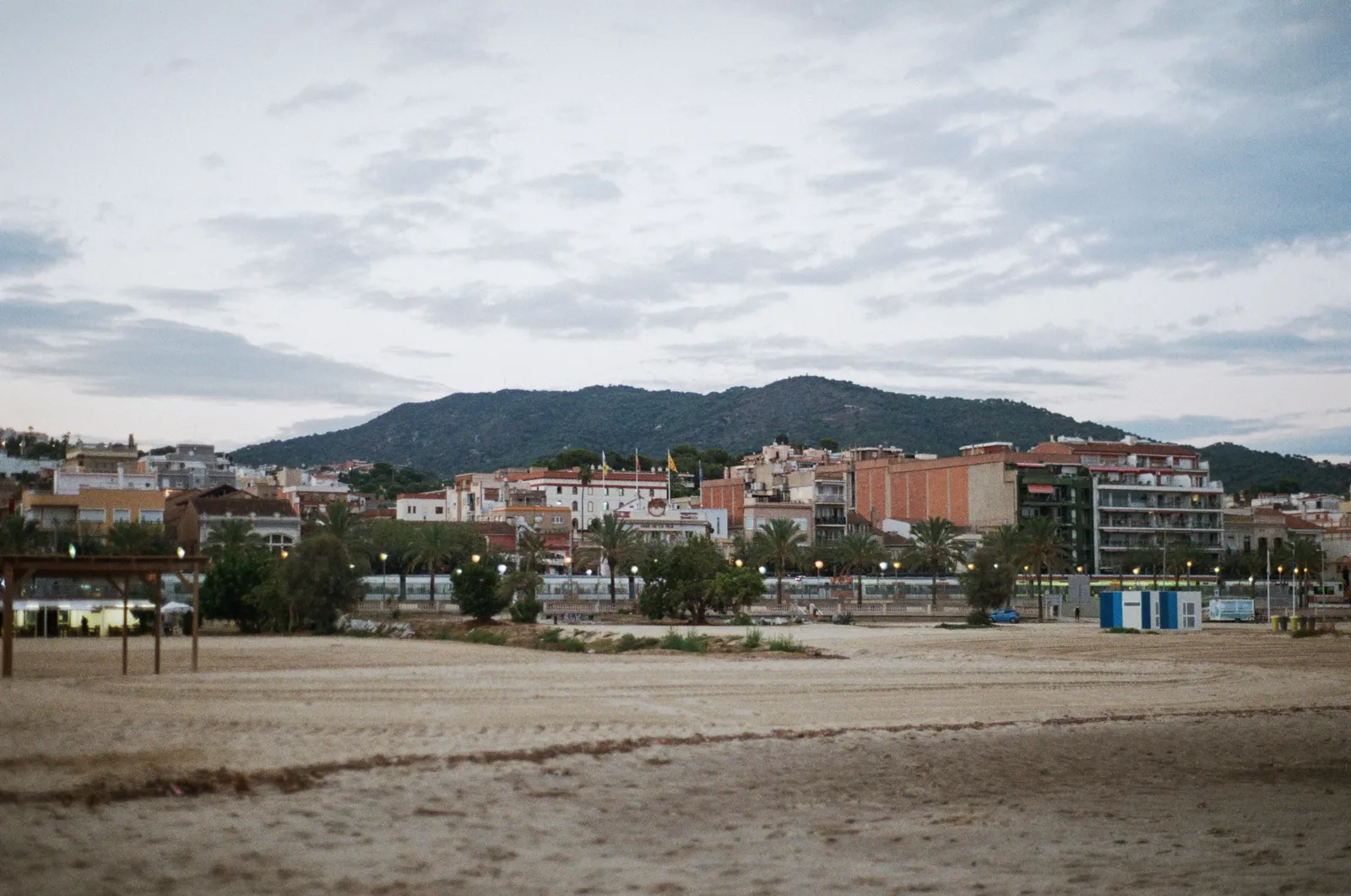
The most underused option is to leave the city entirely. Local trains run north up the coast through Badalona and Montgat, where the beaches are wider, emptier and used almost entirely by people who live there, within about half an hour of the centre and on an ordinary suburban fare.
In the other direction, Castelldefels to the southwest offers a long stretch of sand with the same easy rail connection. Neither is a day trip in any meaningful sense. Both are simply better beaches than the city ones, reached in the time it takes to cross Barcelona on the metro.
When to swim
The Mediterranean here warms slowly and cools slowly. The water is at its best from around midsummer into early autumn, and September is frequently better than June despite the shorter days, because the sea has had all summer to warm up.
Spring sunshine is deceptive and the water is colder than the air suggests. Residents treat the swimming season as considerably shorter than the sunbathing season, which is a useful distinction to borrow.
The other seasonal fact worth knowing is that the beaches are busiest not in August, when a good part of the city leaves, but on warm weekends either side of it, when everyone who stayed is on the sand at once. A weekday in late June or mid September gives you the same water at a fraction of the crowd. Late afternoon is also better than midday, and not only for the shade: the sea breeze picks up through the afternoon and takes the edge off the heat well before the light goes.
For anything more organised than a towel on the sand, the beach clubs and chiringuitos along the strip are covered in our guide to them, and for a first trip where the beach is one item among many, our first-time guide sets out where it belongs in the order.