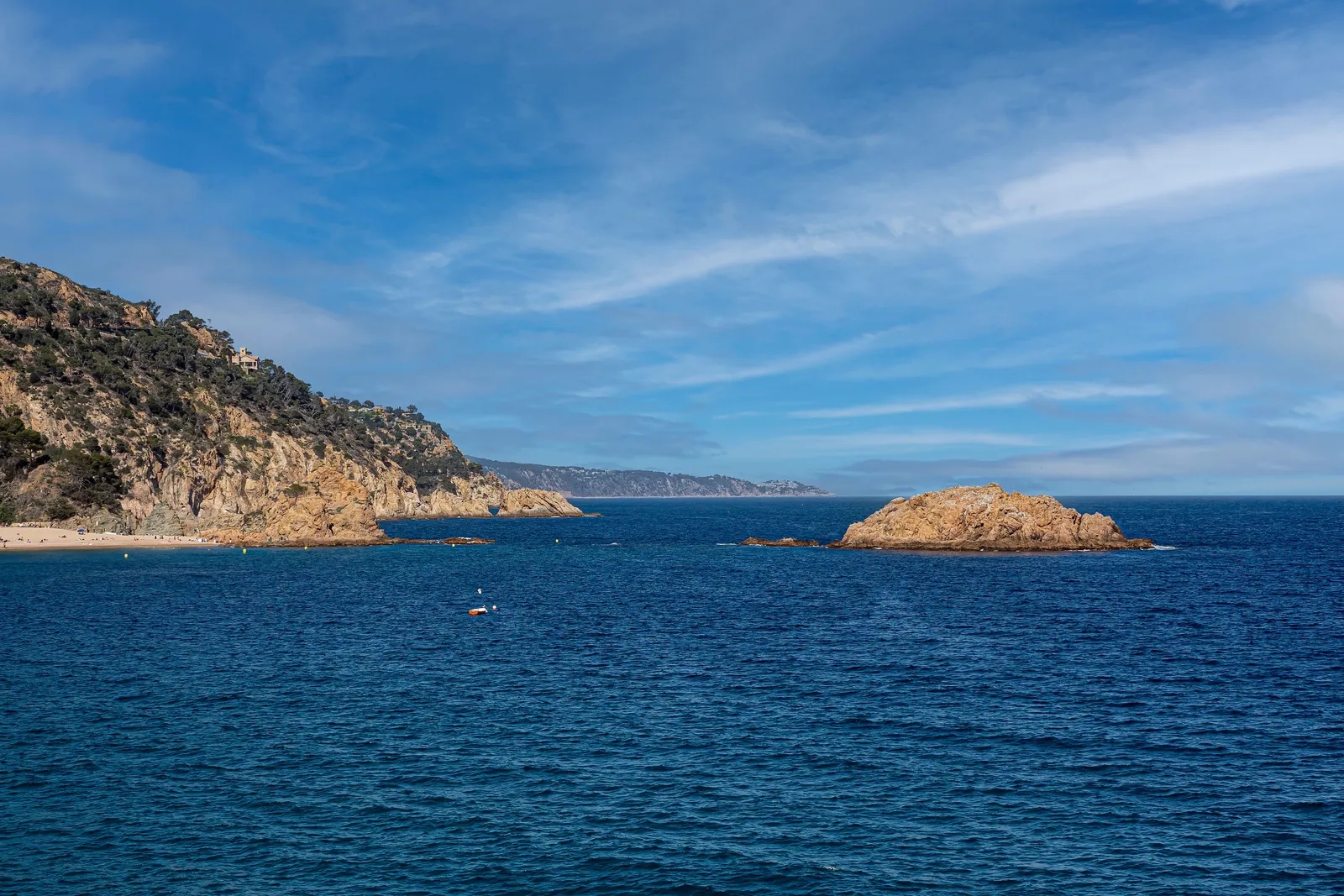
There is a moment on the train north out of Barcelona when the buildings stop, the track swings right, and the sea appears about fifteen metres from your window and stays there for the next forty minutes. That line is the R1, and it is the single most useful piece of infrastructure any visitor to Barcelona has for escaping a crowded city beach. Half an hour of your day buys a stretch of sand with room on it.
Why bother leaving the city beaches
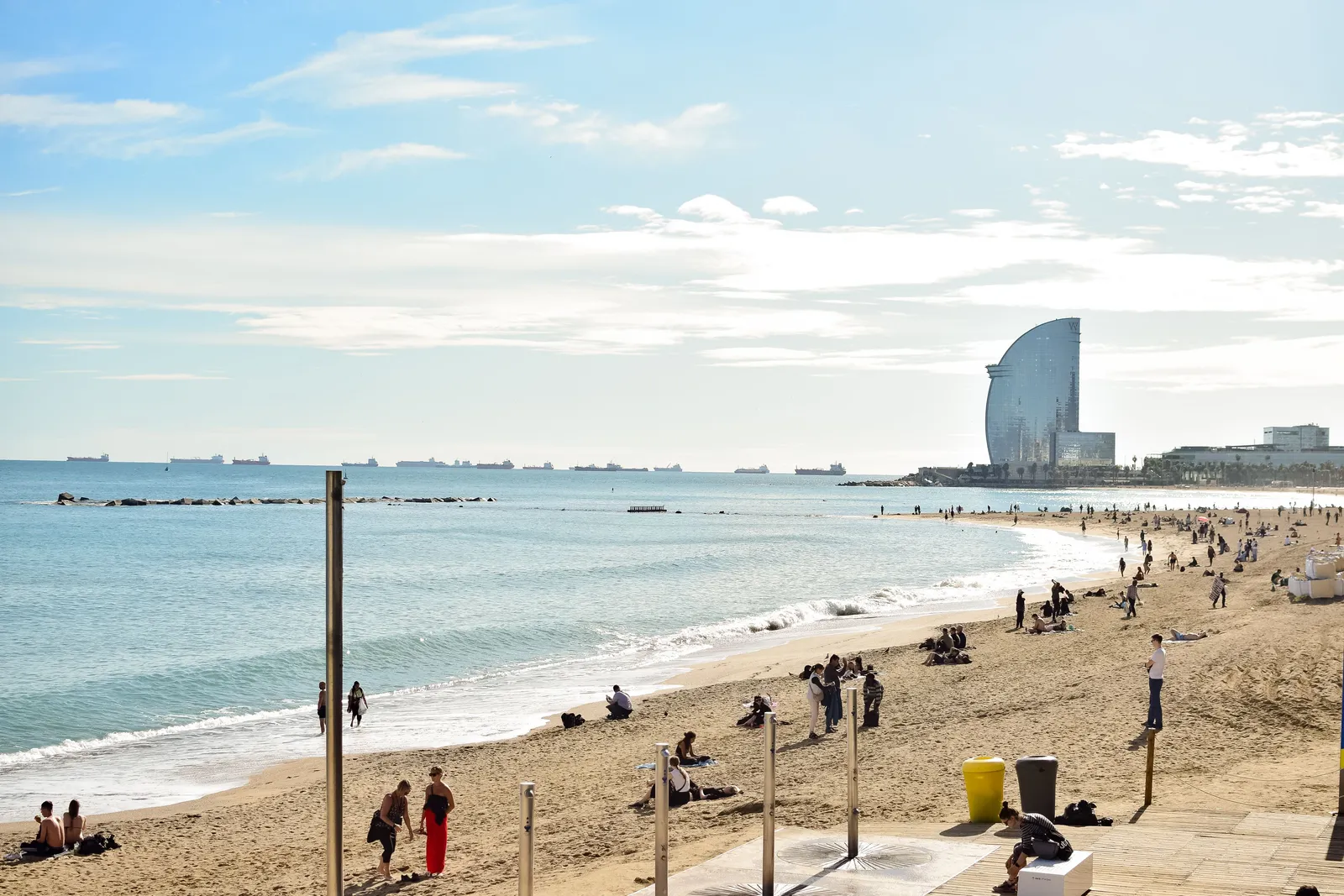
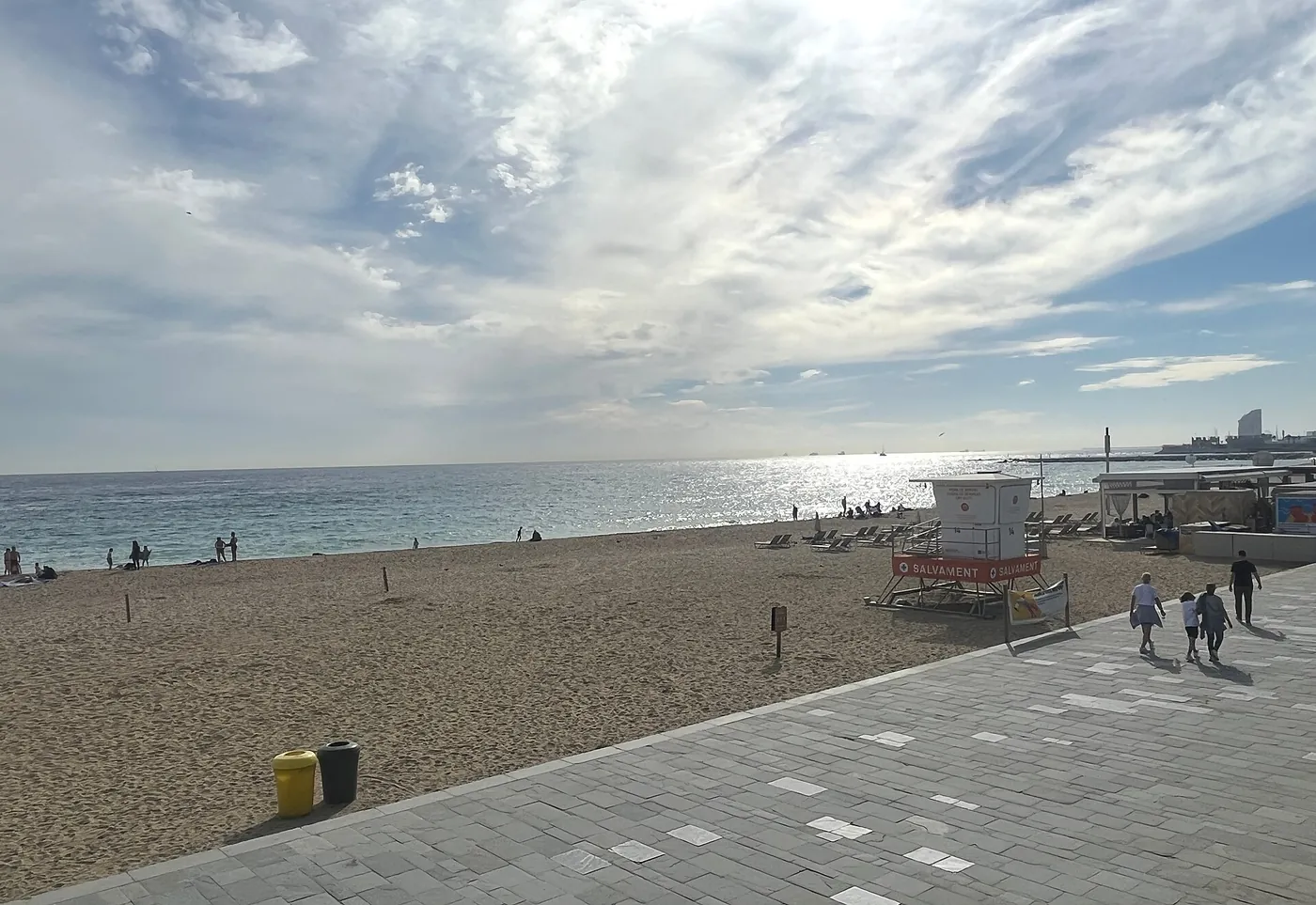
Barceloneta and its neighbours are genuinely good beaches. They are also, in July and August, extremely full, closely policed for hawkers and pickpockets, and backed by the busiest promenade in the city. On a hot Saturday the difference between the Barcelona seafront and a Maresme beach thirty minutes north is not subtle: fewer people per square metre, wider sand, and a bar behind you charging local prices rather than seafront prices.
There is also a civic angle. Barcelona has spent the last few years actively trying to disperse visitors out of a saturated centre. Taking a regional train up the coast for the afternoon is precisely the behaviour the city is asking for, and it happens to give you a better day.
If you want to know which city beaches are still worth your time before you commit to travelling, our guide to Barceloneta and the city beaches covers that side of the choice.
How the R1 line works
The R1 is one of the Rodalies de Catalunya suburban lines, run by the Generalitat de Catalunya. It starts in the south, passes through central Barcelona, and then runs north along the Maresme coast towards Blanes and Maçanet-Massanes.
Within central Barcelona you can board at Barcelona Sants, Placa de Catalunya, Arc de Triomf or El Clot-Arago depending on the service. Placa de Catalunya is the most convenient for most visitors, being directly under the top of La Rambla.
Two things to understand. First, not every train stops everywhere: some services run semi-fast and skip the smaller stations, so a beach that is forty minutes away on one train can be an hour on another. Second, trains run roughly every twenty to thirty minutes on this line through the day, which is frequent enough to travel without planning but not frequent enough to ignore the last departure home. Check the current timetable at rodalies.gencat.cat on the day.
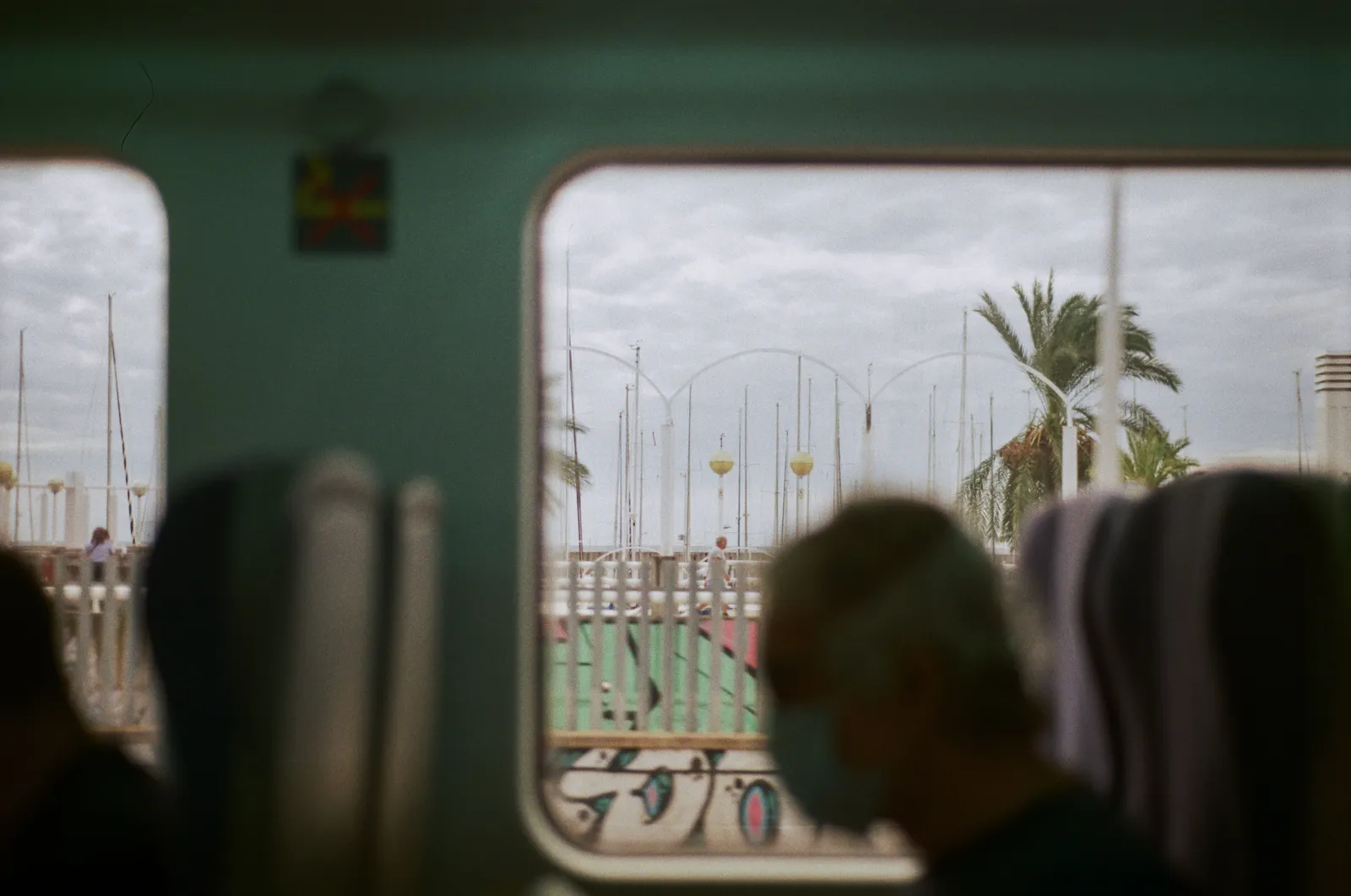
The stations that put you on sand
Going north, these are the stops that actually deliver a beach within a couple of minutes of the platform.
Ocata, in El Masnou, is the classic. It is close to the city, the station sits directly behind a wide, long beach, and there is enough space that even a busy summer Sunday does not feel oppressive. If you want the shortest possible journey to genuinely good sand, this is it.
Premia de Mar and Vilassar de Mar are the next stops up, similar in character, slightly quieter, slightly less known to visitors.
Mataro is the capital of the Maresme and much the biggest town on the line, which makes it the right choice if you want a proper town with restaurants, shops and a market alongside a beach rather than a beach on its own.
Caldes d Estrac, often written Caldetes, is a small spa town with a distinctly pleasant seafront and a long history as a summer retreat for Barcelona families. It is prettier than anything closer to the city.
Sant Pol de Mar is the postcard one: whitewashed houses stacked on a hillside above small coves, and the most photogenic stop on the line. It is also the furthest of the ones listed here except Calella, so budget the travel time honestly.
Calella is around an hour and a quarter out and is a full resort town, with everything that implies both good and bad.
Fares, zones and tickets
Rodalies fares are part of the integrated ATM fare system, which charges by zone crossed rather than by named destination. The nearest Maresme beaches are only one or two zones out from central Barcelona and cost very little; the furthest stops on this stretch cross more zones and cost a few euro each way.
If you are travelling out and back, and especially if you are two or more people, a multi-journey T-casual bought for the correct number of zones normally works out cheaper than buying singles, and it can be shared across a group on some ticket types but not others. The fare structure changes periodically, so confirm the current zones and prices at atm.cat. The broader logic of Barcelona’s ticketing, including which passes cover what, is set out in our Barcelona transport guide.
Reach the Costa Brava coves without a timetableGuided coastal day trips run from Barcelona to the beaches the train line does not reachTiming, crowds and what to expect
The R1 is a commuter line first and a beach line second. Weekday mornings northbound are relatively quiet; summer weekend mornings are not, and on a hot July Saturday you may stand as far as Mataro. Travelling out mid-morning and back mid-evening, rather than with the crowd at either end, makes a real difference.
Lifeguard cover is seasonal and set town by town, concentrated in the summer months and thinning sharply outside them. Facilities vary in the same way: some beaches have showers, toilets and a chiringuito open through the season, others have essentially nothing outside July and August.
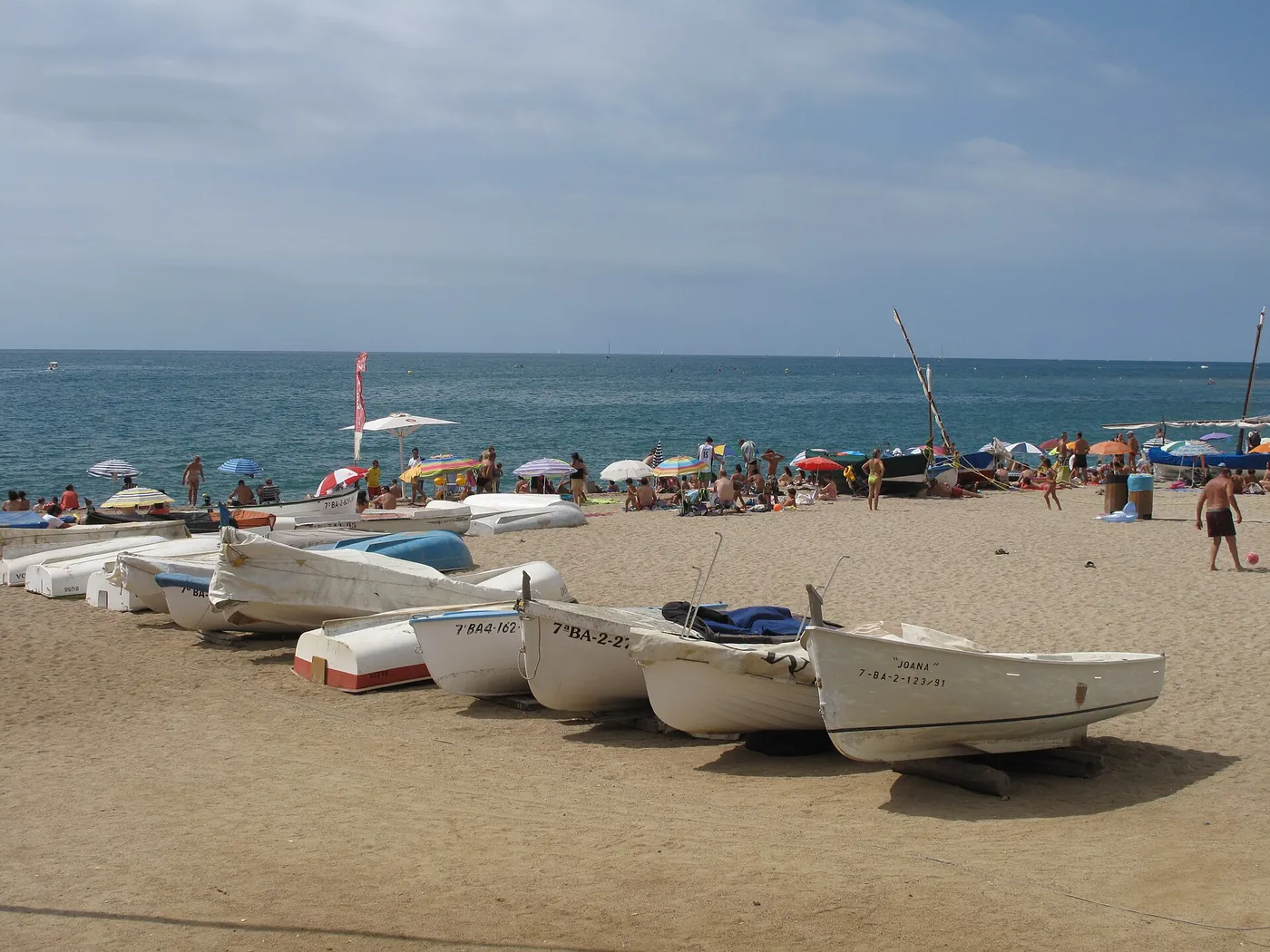
Erosion is worth a mention because it changes what you find. This coastline has lost sand over the years and beaches are periodically replenished, so the width of a specific beach can differ noticeably between seasons. A quick look at recent photographs before you travel is a reasonable precaution if you are going a long way for one particular stretch.
Where this fits against the Costa Brava
The Maresme is not the Costa Brava. It is flatter, more built up, more suburban and much closer, and the railway runs along it, which the Costa Brava’s dramatic cove coastline mostly does not have. That is the trade: the Maresme gives you sand within half an hour on a train ticket, while the coves further north give you far better scenery in exchange for a bus, a car or a much longer day. Our Costa Brava guide covers that alternative properly.
For an afternoon, or for the day when the city beaches are simply too full, the R1 is the answer locals give, and it costs less than lunch.