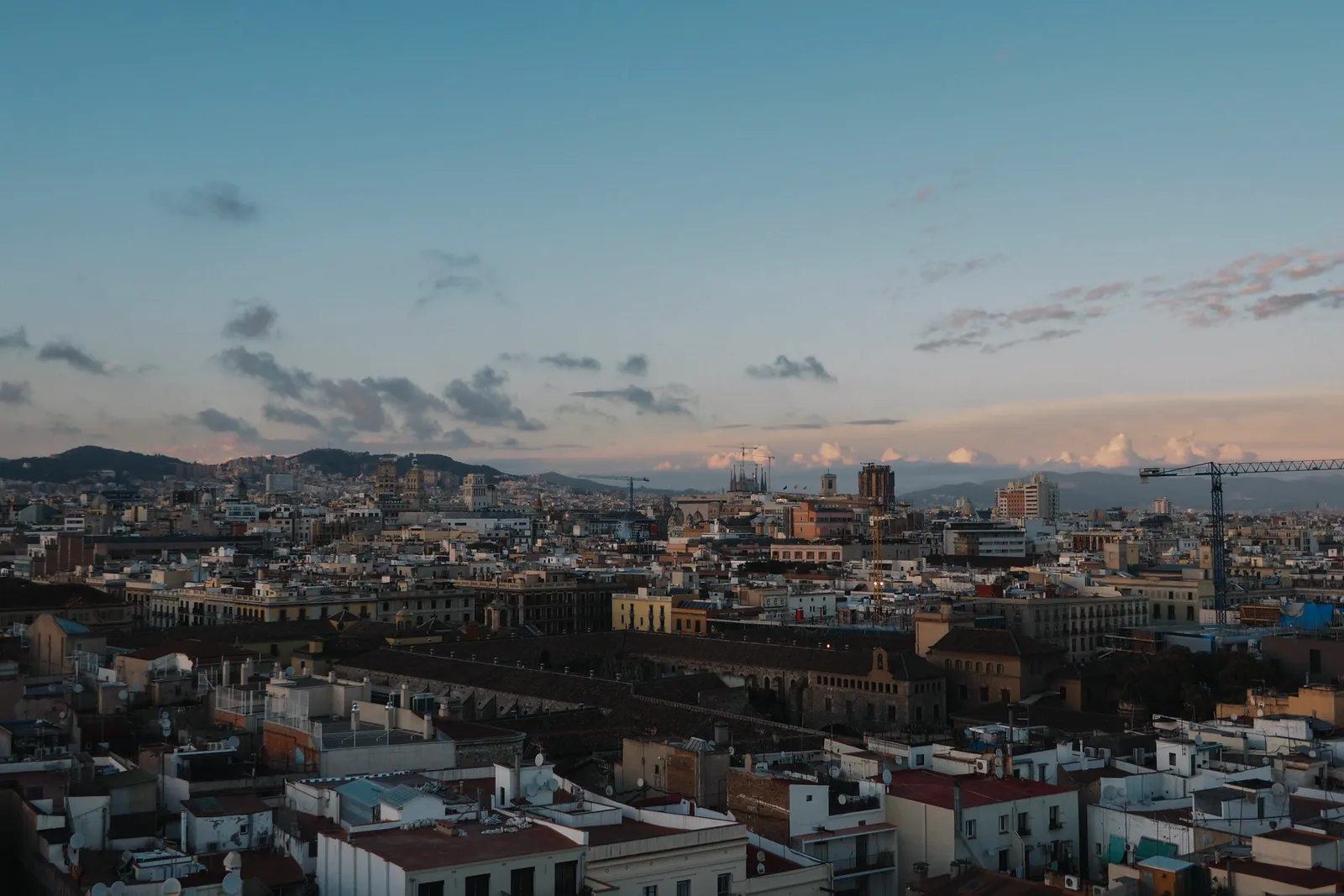
Barcelona is a low city with a few tall buildings and a spectacular skyline, which is an ideal combination for drinking on a roof. The result is a rooftop scene concentrated almost entirely in hotels, priced accordingly, and busiest in exactly the hour everybody wants. Here is how it works, what it costs, and which free alternatives genuinely beat it.
Why they are nearly all hotels
Barcelona has strict rules about what can be built and how high, and the practical consequence is that most of the buildings with a usable roof and a licence to serve drinks on it are hotels. That shapes the whole scene.
It means the terraces are generally well run and comfortable, that they are expensive, and that many operate a guest-priority policy which leaves limited capacity for people walking in off the street. It also means they are scattered across the city rather than clustered in one bar district, so you go to a specific place rather than wander between them.
Where the views are
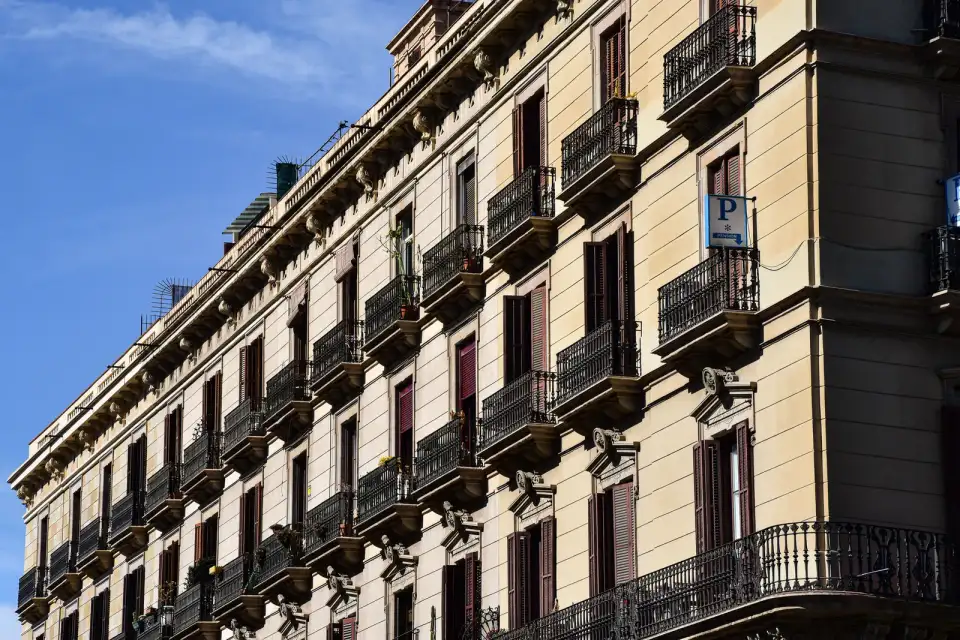
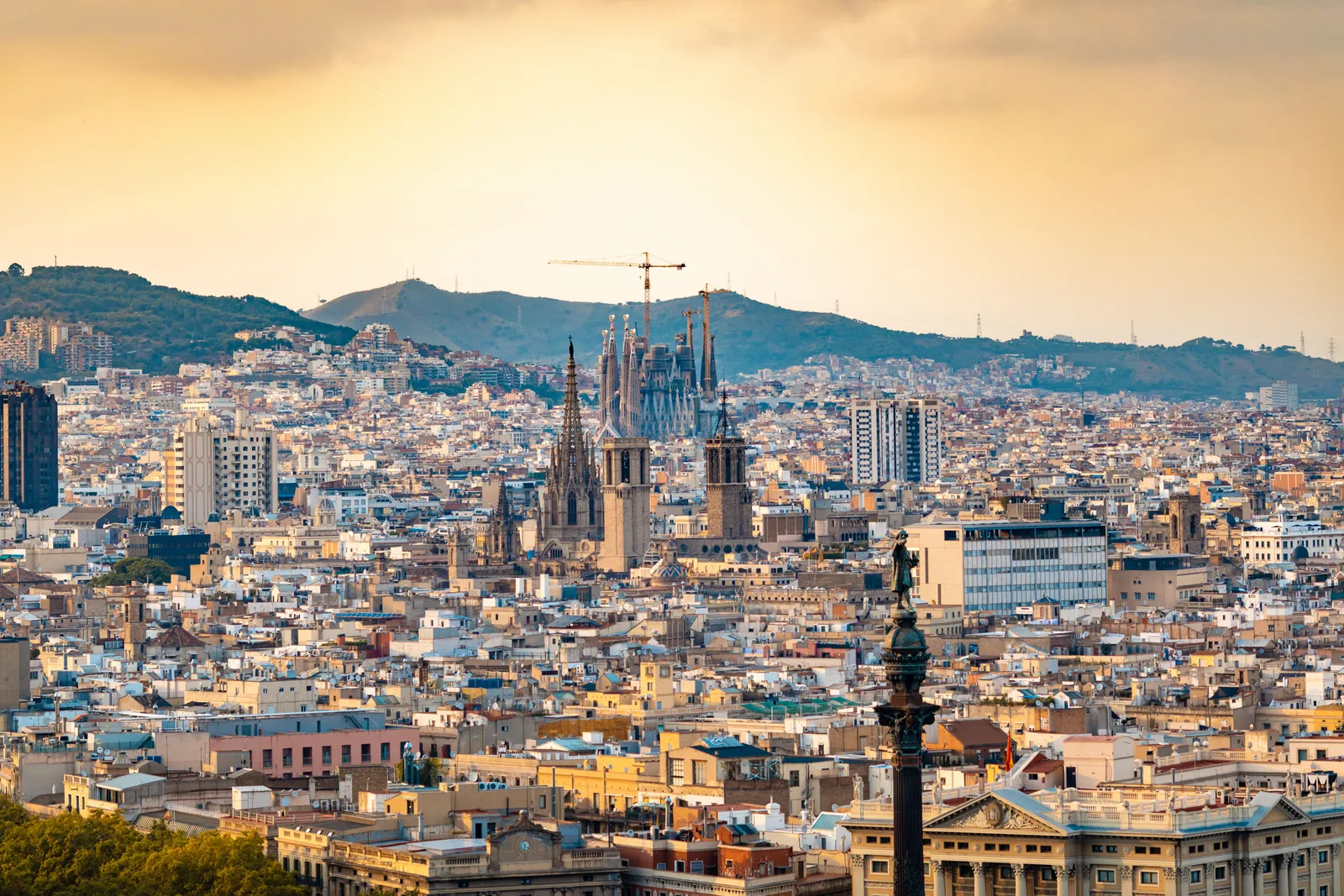
The Eixample has the largest concentration, because it has the taller hotels and because the grid opens up long straight views in every direction. This is where you go for a rooftop looking towards the Sagrada Familia, which is the view most people are actually after.
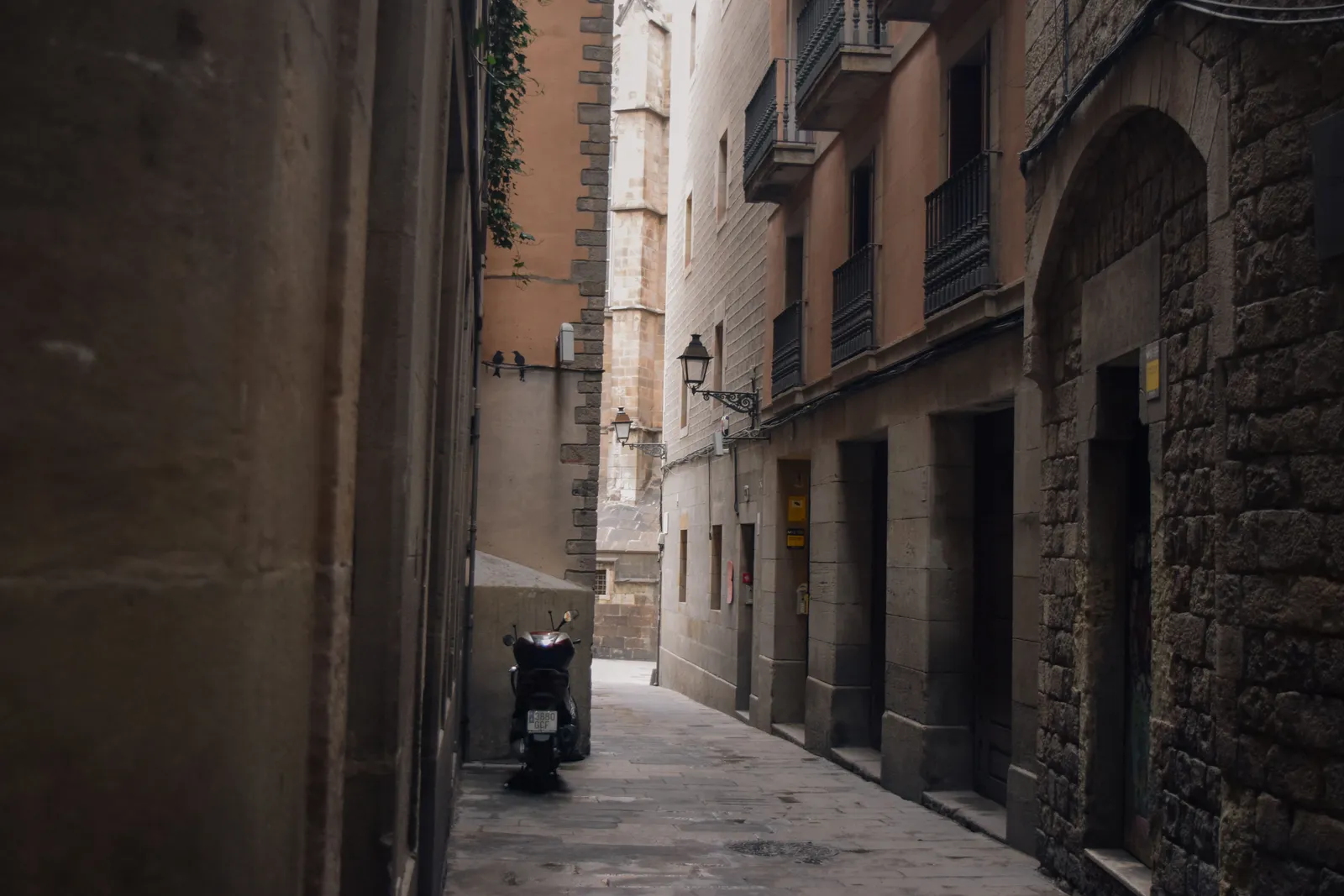
The old city, meaning the Gothic Quarter, El Born and the Raval, has fewer and lower terraces that look across a dense roofscape rather than over the whole city. They are more atmospheric and less panoramic.
The lower city and Montjuic side give you the port and the sea. Our guide to Barcelona’s neighbourhoods sets out how the districts sit relative to each other, which is worth understanding before you pick a roof.
Booking, cost and dress
Three practical things decide whether the evening works.
Book. For anything with a real view in the warm months, and especially for the sunset hour, a reservation is close to essential. Venues that do not take bookings run a queue at the lift that forms well before the sun goes anywhere.
Expect a premium. You are paying for the terrace, not the drink. A cocktail on a hotel roof costs a multiple of the same drink in a neighbourhood bar, and some venues apply a minimum spend for a table as opposed to a seat at the bar. Check the list before you take the table.
Dress. Smart casual is the norm and the real requirement is simply not arriving in beachwear, which catches out a lot of people coming straight from the sand. Where a rooftop has a pool, swimwear is often fine at the pool and not at the bar.
A fourth thing decides it more often than any of those, and it is the weather. Roof terraces close or move indoors in wind and rain, and a booking is no protection against that. The season runs roughly from spring to early autumn, with many terraces shutting entirely over winter or opening only on the warmer evenings. Check that the terrace itself is open rather than just the hotel, and have a ground-level alternative in mind for the evening it is not.
The simplest way onto the roofMany of the best terraces run a guest-priority policy, so staying in the building removes the booking problem entirelyTiming the light
Aim to arrive around an hour before sunset. You get a seat while there is still light, you watch the change rather than arriving into the dark, and you are settled before the queue builds.
One geographical quirk is worth knowing. Barcelona faces the sea to the southeast, which means the sun sets behind the hills rather than over the water. There is no sea sunset here of the kind you get on the Atlantic coast. What you get instead is the last light falling directly on the city, which favours terraces looking inland towards the Sagrada Familia and the Collserola ridge over those facing the port.
The free alternatives, which are often better
Two of the best views in Barcelona cost nothing at all.
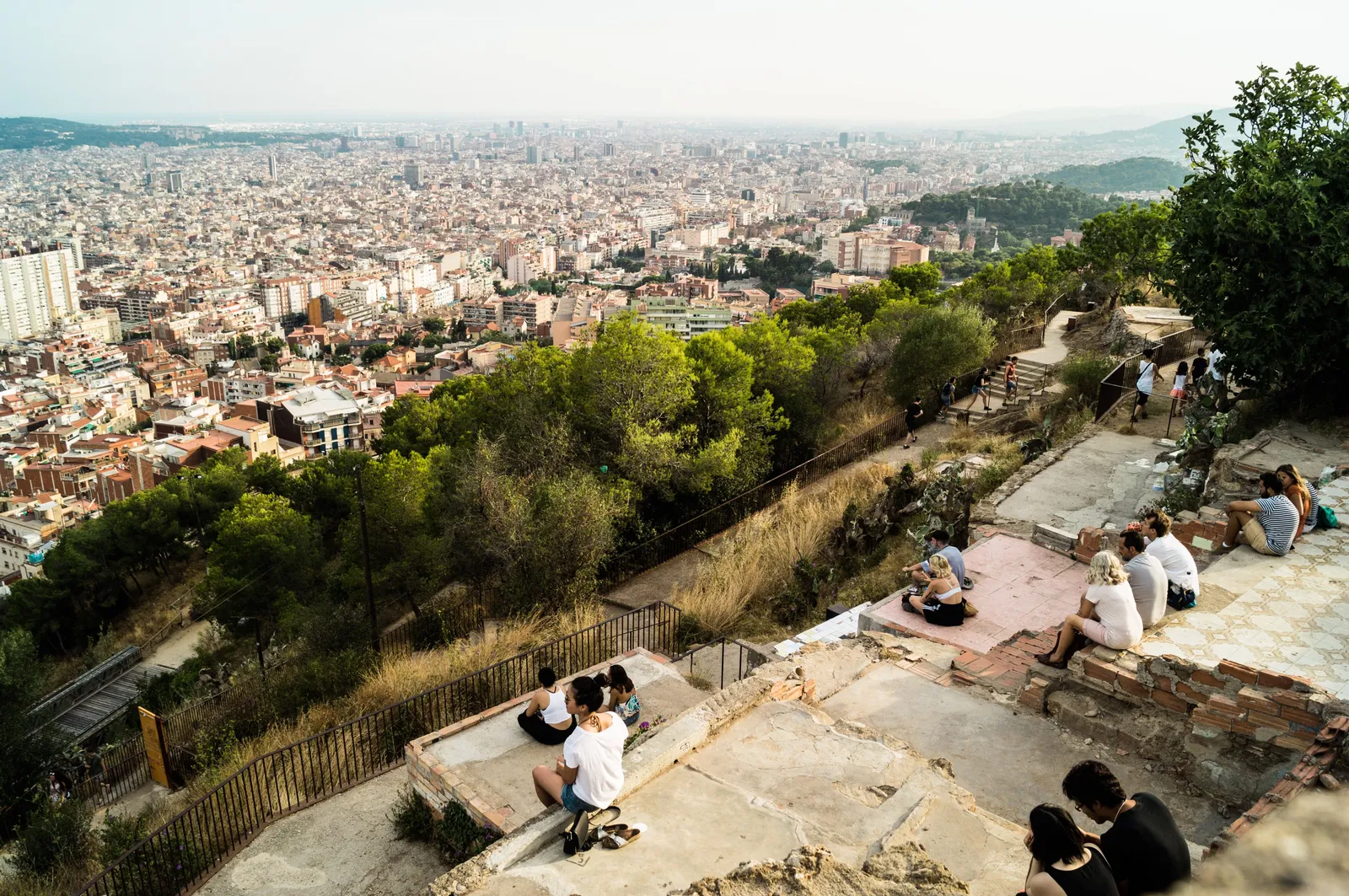
The old anti-aircraft bunkers on the Turó de la Rovira in El Carmel give a full uninterrupted panorama of the entire city, sea to mountains, that no bar terrace comes close to matching. Our guide to the bunkers and viewpoints covers getting up there and the etiquette, since it is a residential neighbourhood that has had problems with crowds.
Montjuic offers several vantage points over the port and the city from its slopes and its castle.
Both come with a practical catch the rooftops do not have. The bunkers are now fenced, and the gates are locked every evening, at around 19:30 in summer and 17:30 in winter, so in summer you have to be out before sunset; check the current hours with the city’s history museum (MUHBA) before you go. Getting down from Montjuic after dark means a long walk, a bus that runs less often in the evening, or a taxi that will not always be waiting, so it is worth deciding how you are leaving before you settle in for the sunset. Bring whatever you intend to drink with you as well, since there is little to buy at the top of either and even less once the light goes.
What neither gives you is a chair, a waiter and somewhere to sit for two hours, which is the actual product a rooftop bar sells. The sensible approach is to treat them as different things: the viewpoints for the view, the rooftops for the evening.
If the beach is more your thing
The seafront has its own version of this, with beach clubs and chiringuitos running from the afternoon into the night, at a similar price premium for a different setting. Our guide to beach clubs and chiringuitos covers that side, and for a lot of visitors in summer it is the better use of an evening than queueing for a lift.