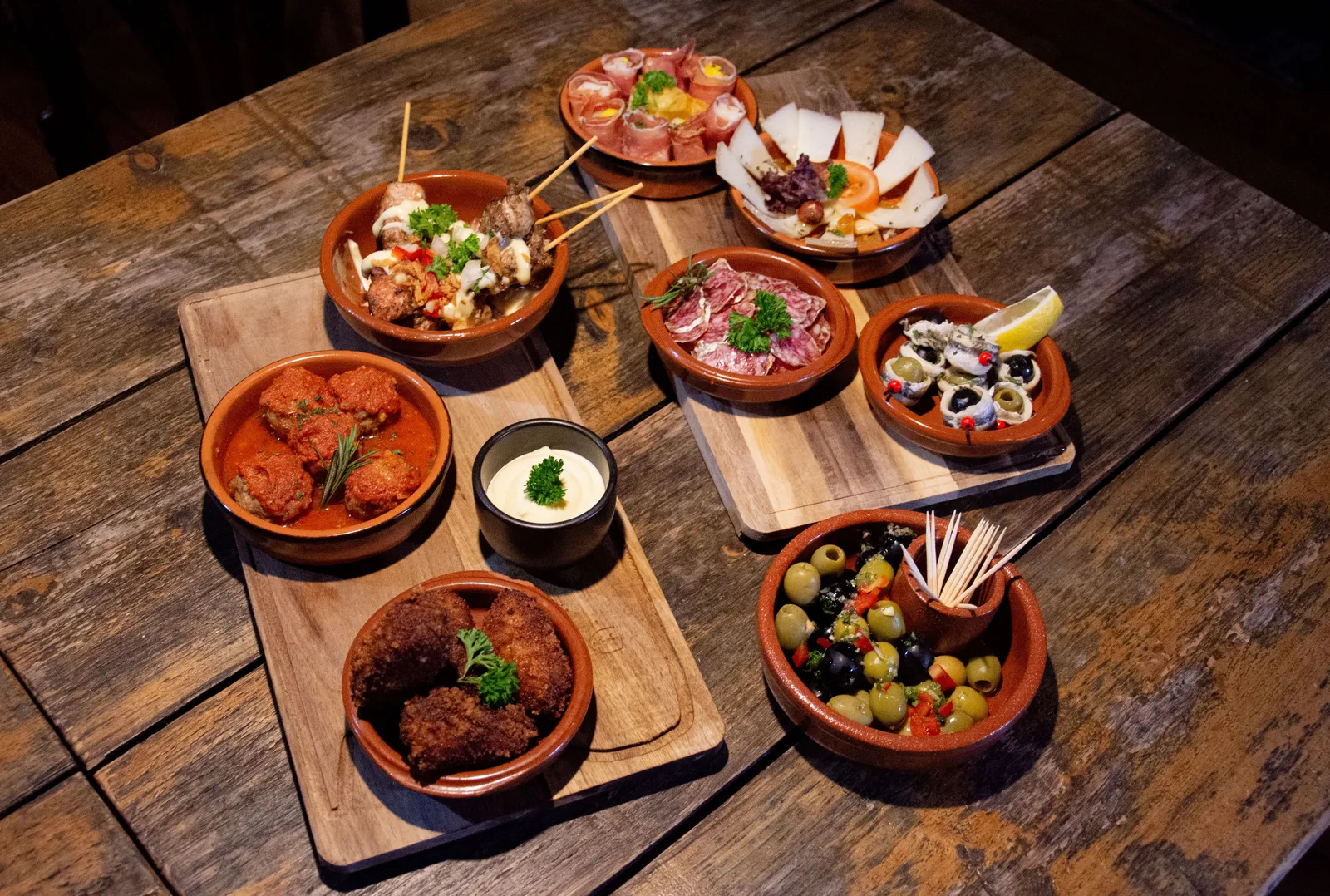
Eating is half the reason to come to Barcelona, and the city makes it easy to do badly and gloriously to do well. The difference is knowing when to eat, what to order and which streets to avoid. Here is the short course, followed by everything I wish someone had told me before my first long lunch.
Eat on Barcelona time
Nothing marks out a tourist like an early dinner. Locals eat lunch from around two and rarely sit down to dinner before nine, often later. Lunch is the big meal, and the menú del día, a set three-course lunch with wine for a fixed price, is one of the best deals in Europe. Lean into the rhythm: a late breakfast, a long lunch, a vermouth before dinner, and dinner when the light goes.
A rough daily rhythm
If you want to eat when the city eats, here is the shape of a typical day. It takes a day or two to adjust, especially if you are coming from a culture that eats dinner at six, but it pays off in better food and livelier rooms.
| Time | What is happening | What to order |
|---|---|---|
| 8 to 10 | Slow breakfast | Coffee, pastry, or pan con tomate |
| 11 to 12 | Second breakfast | A quick bite and a coffee |
| 13:30 to 15:30 | The big lunch | Menú del día, paella, wine |
| 18 to 20 | Vermouth hour | Vermut on ice, olives, crisps |
| 21 onwards | Dinner and tapas | Small plates, cava, wandering |
Do not fight this. Kitchens genuinely close in the afternoon, roughly between four and eight in many neighbourhood spots, so if you turn up hungry at six you will end up in exactly the tourist trap you were trying to avoid.
What to order
Start with the basics done right. Pan con tomate, bread rubbed with tomato, garlic and oil, comes with everything. Then work through the classics: patatas bravas, croquetas, gambas al ajillo, grilled pimientos de Padrón, and anything with jamón. On the coast, order paella or the darker fideuà at lunch, never dinner, and never from a place with a photo menu.
Wash it down like the city does: a vermut on ice before the meal, then Catalan wine or a cava.
Catalan dishes worth hunting down
Barcelona is Catalan first and Spanish second, and the local kitchen has its own flag-bearers. Look for escalivada, smoky roasted peppers and aubergine; esqueixada, a cold salt-cod salad that is perfect in summer; calçots with romesco sauce if you visit between winter and early spring; butifarra sausage with white beans; and fideuà, that noodle cousin of paella. Crema catalana is the dessert, a lighter, citrus-scented take on crème brûlée.
For vegetarians and other diets
Barcelona is easier than most Spanish cities if you do not eat meat, but classic tapas hide surprises. Croquetas are often ham, and even a plate of vegetables can arrive dressed with jamón. Learn the phrase sin carne for no meat and sin jamón for no ham, and lean on escalivada, padrón peppers, pan con tomate, tortilla and mushroom dishes. Coeliacs should say sin gluten; awareness is good and dedicated menus exist, though always confirm at the bar.
The markets
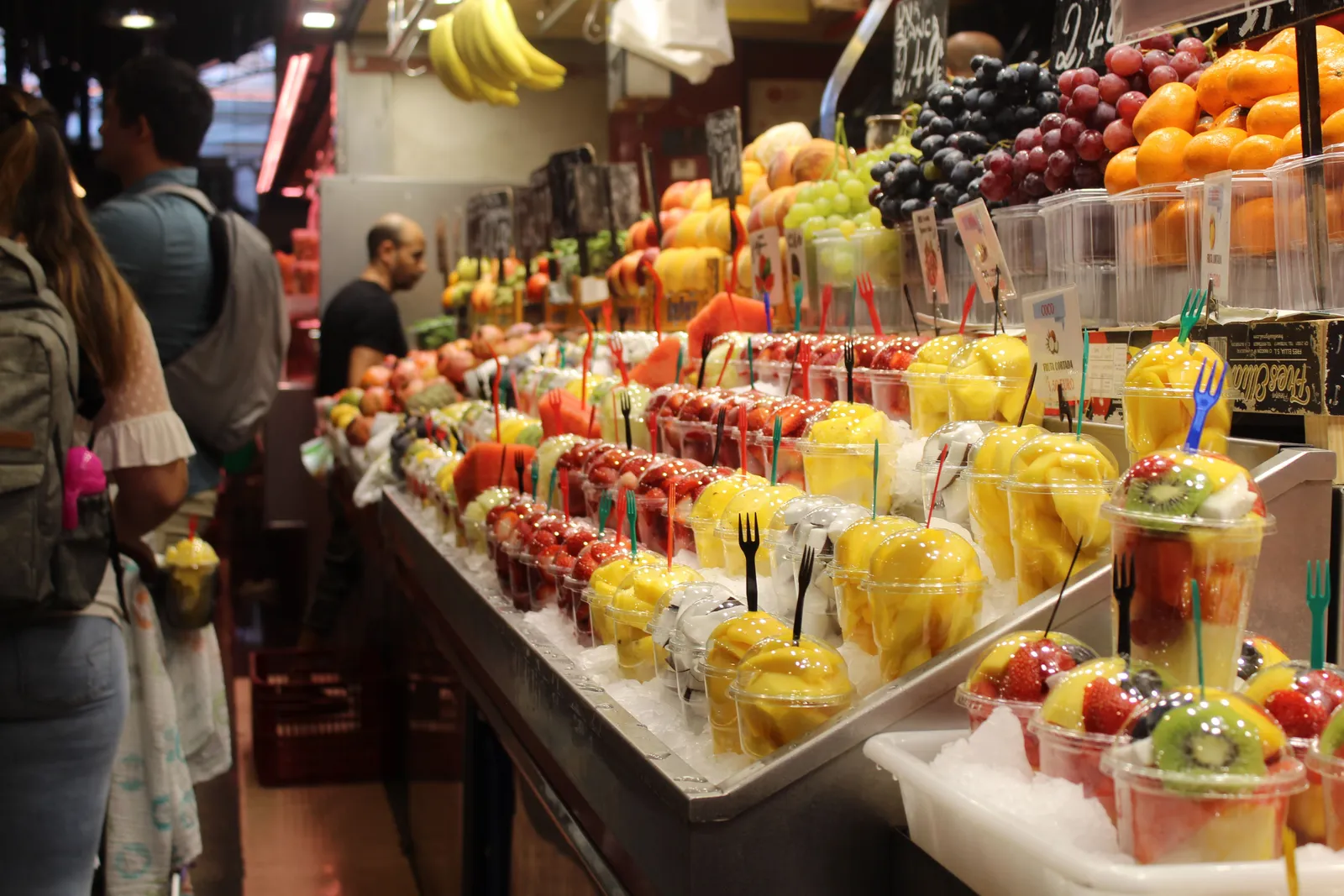
Barcelona’s markets are half larder, half theatre. La Boqueria, just off La Rambla, is the famous one, dazzling but touristy, so go early and eat at the counters at the back rather than the entrance. For the real thing, head to Sant Antoni or the Mercat de la Llibertat in Gràcia, where locals actually shop and the bar stools are worth the wait.
How to eat at a market counter
The counters tucked inside these markets are some of the best-value meals in the city, but they run on their own etiquette. Sit only when a stool is free, wait to be acknowledged rather than shouting an order, and let the cook steer you towards whatever came in fresh that morning. Pay at the end, tip lightly if at all, and do not linger for an hour when a queue is forming behind you. Cash is still handy at the smaller stalls.
Where to eat, and where not to
The single best rule in Barcelona: walk away from La Rambla. The restaurants on and just off it trade on location, not food. Two streets inland, in El Born, Gràcia, Poble-sec or Sant Antoni, prices fall and quality climbs. Look for handwritten menus, a crowd of locals, and no one standing outside trying to wave you in.
Warning signs of a tourist trap
A few reliable red flags: laminated photo menus, staff outside beckoning you in, menus translated into six languages with flags beside them, paella pictured on a board with a plastic sheen, and “sangria” offered as the house speciality when locals rarely drink it. None of these guarantee bad food, but together they mean you are paying for footfall, not flavour.
Match the neighbourhood to the meal
Where you eat shapes what you eat. Gràcia feels villagey and relaxed, El Born leans smart and modern, Poble-sec is the tapas-crawl heartland, and Sant Antoni mixes market-fresh classics with a young crowd. If you want to understand how these districts fit together before you pick a base, our guide to Barcelona’s neighbourhoods breaks down the character of each one.
Eat like a local from day oneSmall-group tapas and market tours that skip the tourist trapsTapas crawl, the local way
The joy of tapas is movement: one or two plates and a drink at each stop, then on to the next. Pick a barrio with a dense run of bars, Poble-sec’s Carrer de Blai is famous for cheap pintxos, El Born for something smarter, and let the evening wander. Pace yourself, share everything, and follow the crowds.
Pintxos versus tapas
A quick distinction that saves confusion. Pintxos are the Basque-style bites speared with a cocktail stick, usually laid out on the bar for you to grab yourself. You keep the sticks and the bar counts them at the end to work out your bill, so do not lose them. Tapas proper are ordered from the kitchen and brought to you. On Carrer de Blai many bars charge a flat low price per pintxo, which makes it a brilliant, cheap way to graze across several stops.
Drinks, from vermut to cava
Drinking in Barcelona is gentle and social rather than heavy. Vermut, the sweet fortified wine served on ice with a slice of orange and an olive, is the ritual aperitif, and “fer el vermut” (doing the vermouth) is a genuine weekend institution. With food, choose a local Catalan wine, a Penedès white or a red from Priorat or Montsant, or a glass of cava, the region’s sparkling wine, which is far cheaper and better here than the export price suggests. Coffee comes after the meal, never during, and a cortado (espresso cut with a little milk) is the safe order.
What to skip
Honesty time: sangria is largely a tourist drink, and you will rarely see a local order it. If you fancy something long and cold, ask for tinto de verano, red wine with lemon soda, which is what people actually drink in the heat. Skip the giant paella-for-two photographed outside a Rambla restaurant, and be wary of anywhere pushing “authentic Spanish” hardest.
Prices and tipping
Eating out here is still good value by Northern European standards if you avoid the obvious traps. A menú del día typically runs a modest fixed price for three courses with a drink, tapas plates are a few euros each, and a sit-down dinner with wine need not break the bank two streets back from the tourist drag.
How tipping works
Tipping is not obligatory and service is not expected to depend on it. Locals round up or leave a small amount for good service, nothing like the percentages expected in North America. Check whether a cobert (cover charge) or bread charge has already been added before you decide. Card payment is near universal, though a few tiny bars and market stalls still prefer cash, so carry a little.
Eating beyond the city
Some of the best meals near Barcelona are a train ride away. On the coast, the fishing towns of the Costa Brava serve seafood rice and just-landed fish that shame most city paellas, while a day in the mountains has its own rustic table. If you are weighing up a day trip and want to eat well at the end of it, our comparison of Montserrat or the Costa Brava helps you choose, and the coast wins on food nearly every time.
Seasonal treats
Eat with the calendar. Calçots, the sweet spring onions grilled over flames and dunked in romesco, appear from roughly late winter into early spring and are often a messy communal feast. Summer brings cold soups and salt-cod salads, autumn brings wild mushrooms (bolets) and game, and the festive season brings turrón nougat and cava by the case. Ask what is in season and you will eat better for it.
Staying safe and sensible while you eat
Barcelona’s restaurant scene is welcoming, but the busy tapas streets are also where pickpockets work. Keep bags on your lap or between your feet, never hang a bag on the back of a chair, and do not leave a phone sitting on an outdoor table. If something does go wrong, from a lost card to a medical issue, it is worth knowing who to call before you need to, so save our rundown of Barcelona emergency numbers to your phone. It is a two-minute job that turns a bad night into a manageable one.
The short version
Eat late, order pan con tomate and whatever the counter is proud of, take paella at lunch, and never trust a photo menu. Browse Sant Antoni over La Boqueria, crawl the tapas bars two streets back from the tourist drag, and start with a vermouth. Do that and Barcelona will feed you very well indeed.
So here is my question to you: are you the type to plan every reservation, or the type to follow a crowd of locals down a side street and see where the evening goes? In Barcelona, both can work beautifully.