No architect has ever owned a city the way Antoni Gaudí owns Barcelona. His buildings are the reason many people book the flight, and unlike a lot of hyped sights, they genuinely deliver. Here is how to see the best of them, in the right order, without losing half your trip to queues.
Who was Gaudí, and why does it matter?
Antoni Gaudí was a Catalan architect who spent most of his working life in Barcelona, and his style is unlike anyone else’s before or since. He looked at nature, at bones and shells and branching trees, and translated what he saw into stone, tile and iron. That is why his buildings feel alive rather than designed: the columns lean like trunks, the balconies curl like leaves, the roofs ripple like water.
Understanding this changes how you visit. If you walk in expecting a museum, you will tick it off and leave. If you walk in expecting a forest made of stone, you will slow down and actually see it. Most of his major works in and around the city are now UNESCO World Heritage listed, which is a fair signal that they are worth your time and not just marketing.
A quick word on the crowds
Gaudí’s fame is also his curse. The headline sites are among the busiest in Spain, and the difference between a magical visit and a miserable one is almost entirely down to timing and booking. Everything below is written with that in mind.
Start with the Sagrada Família
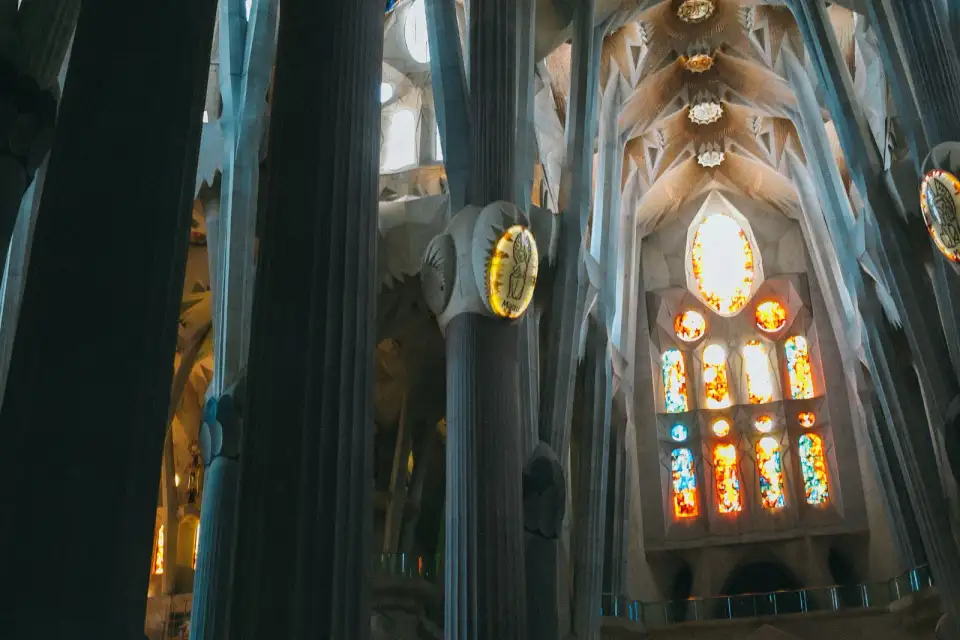
If you see one Gaudí building, make it this one. The Sagrada Família is a cathedral of stone trees and coloured light, begun in 1882 and still unfinished, and somehow more moving for it. A milestone landed in 2026: the central Tower of Jesus Christ, the last and tallest of the eighteen, was completed and blessed, so the silhouette you photograph is finally the one Gaudí drew. Work continues on the decoration and the Glory Facade, and the new tower’s viewing platform is not open to the public yet, so do not book expecting to climb it.
Go early or late for the softest light through the stained glass, and book a timed slot well in advance, because this is the single most popular sight in the city. Booking opens roughly two months out; in the busy months the good slots go a couple of weeks ahead, and tower access sells out first, often weeks earlier than general entry. Decide before you book.
Which ticket should you buy?
There are broadly three options: basic entry, entry with an audio guide or app, and entry plus a tower climb. The basic ticket gets you into the interior, which is where the real emotional punch lives. The audio guide is genuinely worth it here because the symbolism is dense and easy to miss. The tower climb (one of the older towers, not the new central one) gives you close-up views of the spires and a small lift up, followed by a walk down a tight spiral staircase, so skip it if stairs or heights are a problem.
When the light is best
The eastern Nativity Facade windows glow in the morning in blues and greens, while the western Passion Facade windows burn orange and red in the late afternoon. If colour is what you came for, aim for either the first slot of the day or the last couple of hours before closing.
Park Güell, Gaudí at play
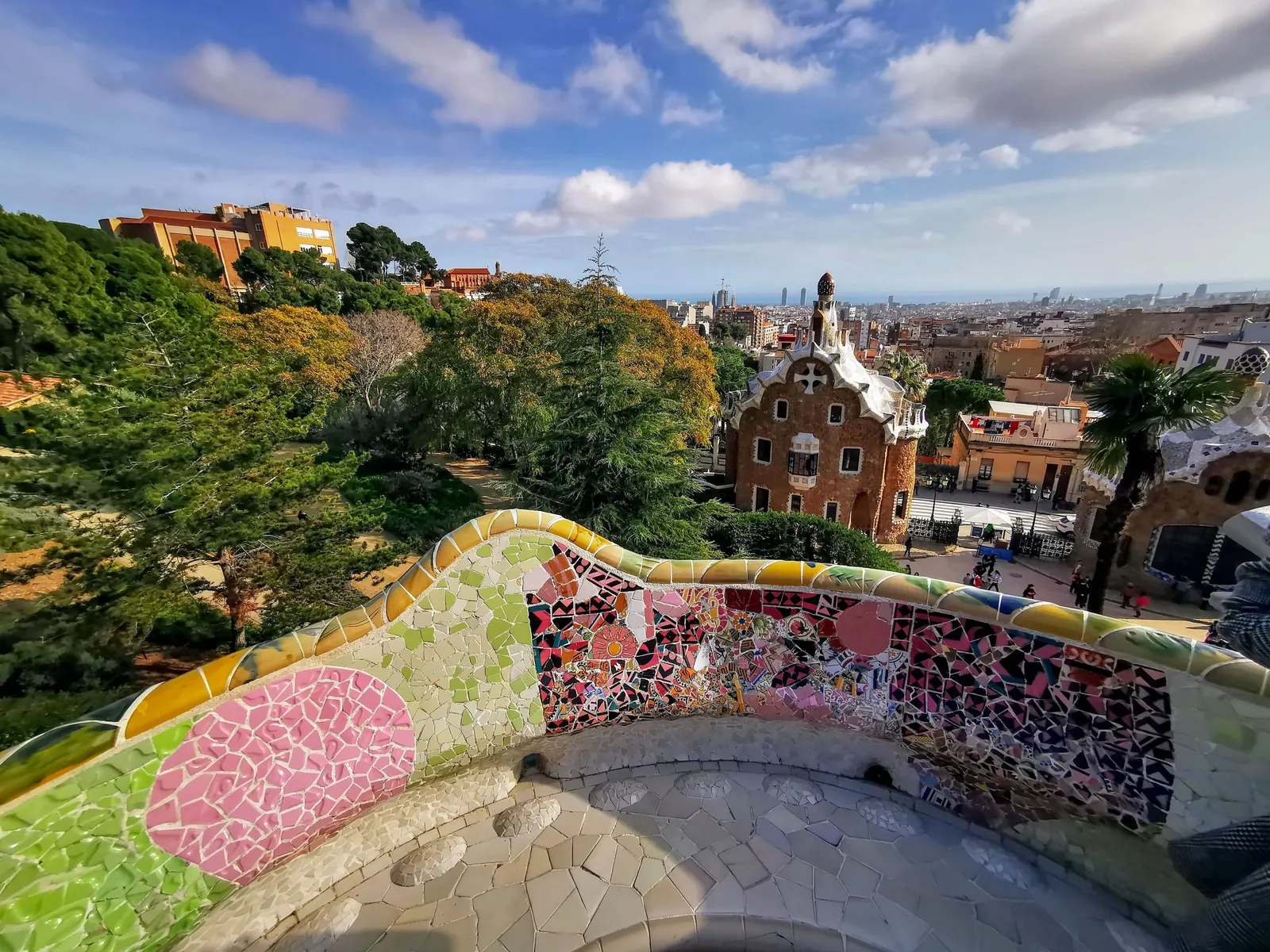
Up on a hillside in Gràcia, Park Güell is Gaudí let loose: a mosaic dragon, a serpentine bench of broken tiles, and stone colonnades that lean like living things. The monumental core needs a ticket with a time slot, but much of the surrounding park is free to wander.
Come first thing or late afternoon. The middle of the day is hot, crowded and hard on photos.
Getting up the hill
Park Güell sits well above the city, and the walk up from the nearest metro is steep. There are outdoor escalators on some approaches, and a local bus that drops you closer to the entrance, but plan for a climb whichever way you come. Wear proper shoes and bring water, especially in summer.
Free zones versus the paid core
You do not need a ticket to enjoy the pine woods, the viewpoints and the general park atmosphere. The ticket covers the Monumental Zone, which is the famous mosaic terrace, the dragon staircase and the columned hall beneath. If your budget is tight, the free areas still give you a strong sense of the place, though the icons everyone photographs are inside the paid zone.
The Passeig de Gràcia pair
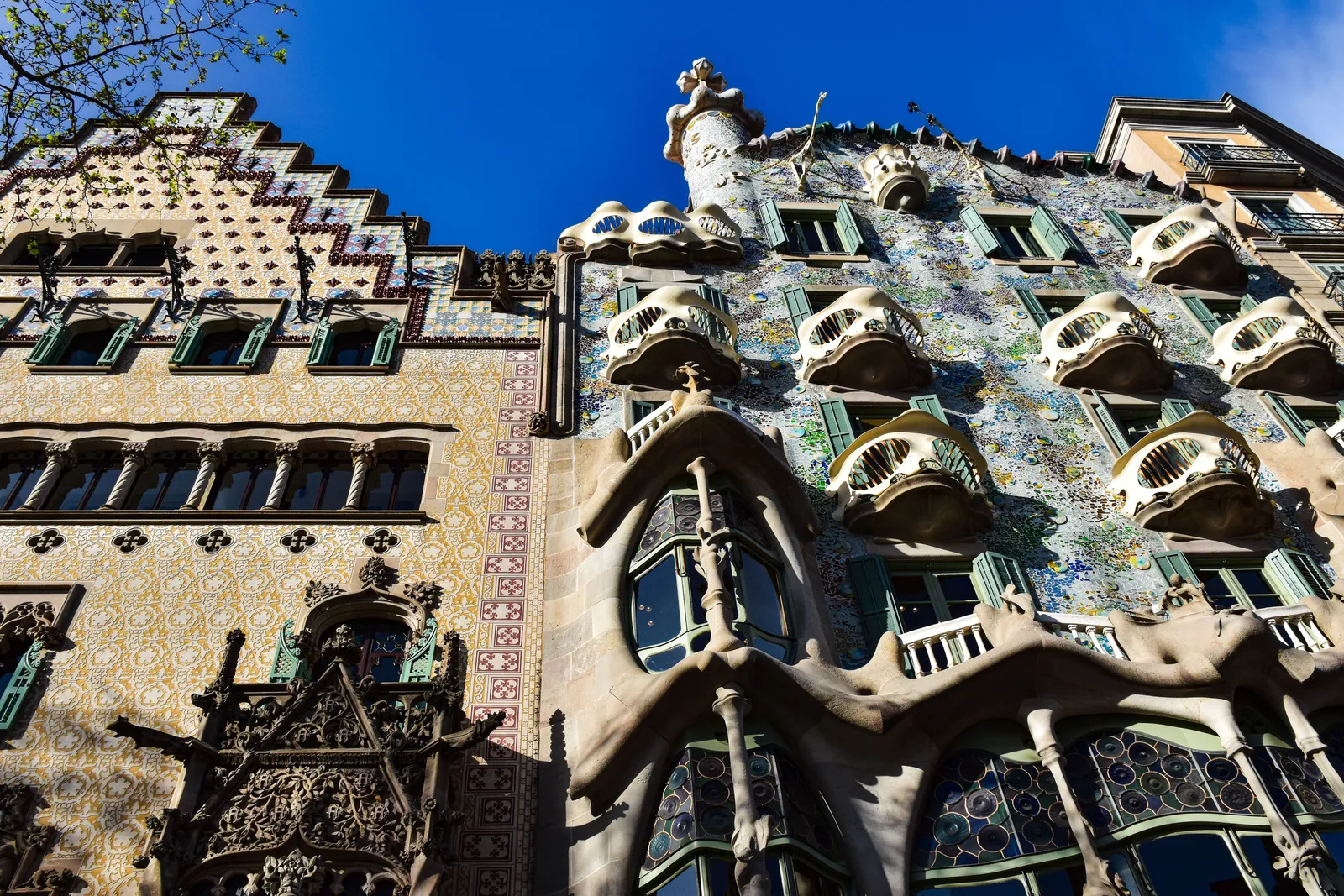
On the city’s grandest avenue stand two Gaudí houses you can pair in an afternoon. Casa Batlló is the dragon house, all bone-like balconies and shimmering scales, and its light-filled interior is one of the best audio-guided visits in the city. A few blocks up, Casa Milà, known as La Pedrera, rolls like a stone quarry, with a rooftop of warrior chimneys that is magical on the evening visit.
If you only have time for one, Casa Batlló wins on wow, Casa Milà on calm.
Casa Batlló in detail
The visit here leans hard into technology, with an augmented reality guide that overlays what each room once looked like. Some travellers love it, others find it a distraction from simply looking at the building. Either way, the light well tiled in graded blues and the attic with its rib-like arches are unforgettable, and the roof terrace with its scaly dragon spine is the money shot.
Casa Milà in detail
La Pedrera is calmer and more architectural. The undulating stone facade has no straight lines, the interior courtyards are painted in soft washes, and the rooftop chimneys look like a chess set designed by a dreamer. In summer there are evening rooftop sessions with music, which are worth the premium if you want the building without the daytime bustle.
The gems most visitors miss
Gaudí is more than the big four. Palau Güell, just off La Rambla, is the early palace where he first cut loose, with a starlit dome and a riot of mosaic chimneys. Casa Vicens, his very first house, only opened to the public in 2017 and rewards the trip to Gràcia. Further out, the Colònia Güell crypt is the laboratory where he tested the ideas that became the Sagrada Família, and it is blissfully quiet.
Why the quiet sites are worth it
The magic of the lesser-known Gaudí sites is that you can actually stand still and think. At Colònia Güell you can study the leaning columns and the hanging-chain models that Gaudí used to work out his structures, without a single selfie stick in view. It sits outside the city and takes a suburban train plus a short walk, so it is a half-day of its own, but for anyone who has fallen for his work it is deeply rewarding.
How to compare the main sites
Before you commit money and time slots, it helps to see the trade-offs side by side. The table below is a rough guide rather than gospel, and prices and hours shift, so always confirm on each site’s official page before you book.
| Site | Roughly how long | Crowd level | Best for |
|---|---|---|---|
| Sagrada Família | 1.5 to 2 hours | Very high | The single unmissable visit |
| Park Güell | 1.5 to 2 hours | High | Mosaics and city views |
| Casa Batlló | 1 to 1.5 hours | High | Pure visual wow |
| Casa Milà | 1 to 1.5 hours | Medium to high | Calmer, rooftop chimneys |
| Palau Güell | 1 hour | Low to medium | Early Gaudí, fewer people |
| Casa Vicens | 1 hour | Low | His first house, quiet |
| Colònia Güell | Half day with travel | Very low | Structural genius in peace |
How to see it all without burning out
Do not try to cram every site into one day. Two half-days built around timed tickets is far kinder: the Sagrada Família and a Passeig de Gràcia house on one, Park Güell and a lesser-known gem on another. Book the Sagrada Família first, then slot everything else around it.
Gaudí tickets, sorted before you goTimed entry and guided combos for the Sagrada Família, Park Güell and the housesStaying central helps more than you would think. From the Eixample you can walk to the Passeig de Gràcia houses and reach the Sagrada Família in minutes, which turns tight ticket times into a non-issue. If this is your first trip and you are still deciding where to base yourself and how the neighbourhoods fit together, our first-time guide to Barcelona walks through the practical basics.
Getting between the sites
The Sagrada Família, the Passeig de Gràcia houses and Palau Güell are all reachable on foot or by a short metro hop within the city centre. Park Güell and Casa Vicens are up in Gràcia and take a little longer. Colònia Güell is genuinely out of town. A rechargeable travel card for the metro pays for itself quickly and saves you queuing for single tickets all day.
Staying safe and sensible
Gaudí’s sites draw crowds, and crowds draw pickpockets, particularly around the Sagrada Família entrance, on La Rambla near Palau Güell and on the busy metro lines. Keep your bag zipped and in front of you, and do not leave a phone on a café table. If something does go wrong, it is worth knowing who to call before you need to, so save our rundown of Barcelona’s emergency numbers to your phone.
What is honestly not worth it
A few honest notes. The Sagrada Família tower climb is atmospheric but not essential, and if you are short on time or nervous on stairs you lose very little by skipping it. The souvenir shops clustered around the big sites are overpriced, so buy your postcards elsewhere. And do not pay a premium for a guided walking tour that only shows you the outsides of buildings you then have to pay to enter separately: check exactly what is included before you book. Finally, resist the urge to do all four majors in a single day. It looks efficient on paper and feels like a forced march in reality.
The short version
See the Sagrada Família above all, give Park Güell a morning, pair the two Passeig de Gràcia houses, and if you have the appetite, seek out Palau Güell or Casa Vicens for Gaudí without the crush. Book the timed sites ahead, chase the good light, and let the rest of the city fill the gaps between.
Gaudí rewards the traveller who slows down. Book smart, walk between the sites, take the breaks, and you will leave understanding why an entire city organised itself around one man’s imagination. Which of his buildings are you most looking forward to standing inside?