Barcelona is one of the easiest big cities in Europe to get around, and getting it right takes about five minutes of planning. Here is what to buy, how the metro works, and how to come in from the airport without overpaying.
Buy the right ticket
Skip single tickets, they are poor value. Most visitors want one of two options. The T-casual is ten single journeys on one card, shareable across metro, bus and tram within the central zone, and it is what locals use. If you plan to ride a lot, the Hola Barcelona travel card gives unlimited trips for a set number of days, and it includes the airport metro line, which the T-casual does not.
Rough rule: a few rides a day, buy a T-casual; heavy use or airport-by-metro, get the Hola Barcelona.
How the zone system works
Almost everything a visitor wants sits in Zone 1, the central zone, and the tickets above all cover it. That includes the metro, the city buses, the trams, the local FGC lines and the regional Rodalies trains within the city limits. The main thing that falls outside Zone 1 is certain day trips, for example the train out towards Montserrat, where you buy a separate fare. Inside Zone 1 a single validated journey lets you change between metro, bus and tram for a set window of time, so a metro ride followed by a short bus hop can count as one trip on your T-casual if you do it promptly.
Which pass suits which trip
Here is the honest comparison most guides skip.
| Ticket | Best for | Covers airport metro? | Shareable? |
|---|---|---|---|
| Single ticket | Almost never, poor value | No | No |
| T-casual (10 journeys) | Most short city breaks | No | Yes, across a group |
| Hola Barcelona (unlimited, set days) | Heavy riders, airport by metro | Yes | No, one person only |
The quiet winner for couples and families is the T-casual, because two people can tap the same card one after the other. The Hola Barcelona cannot be shared, so a family of four would need four of them, which rarely beats a couple of T-casual cards unless you are riding constantly.
The metro is your friend
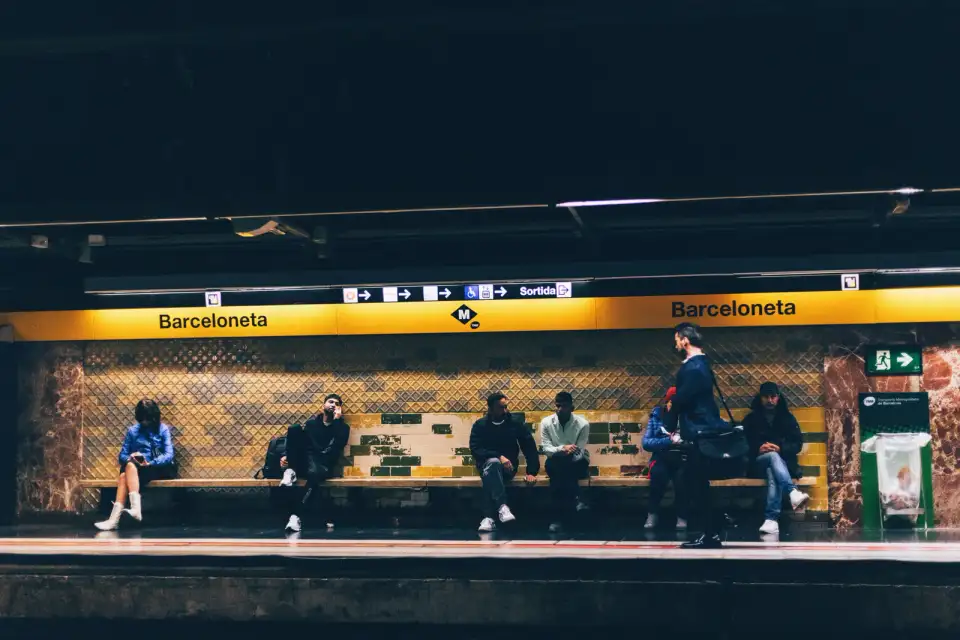
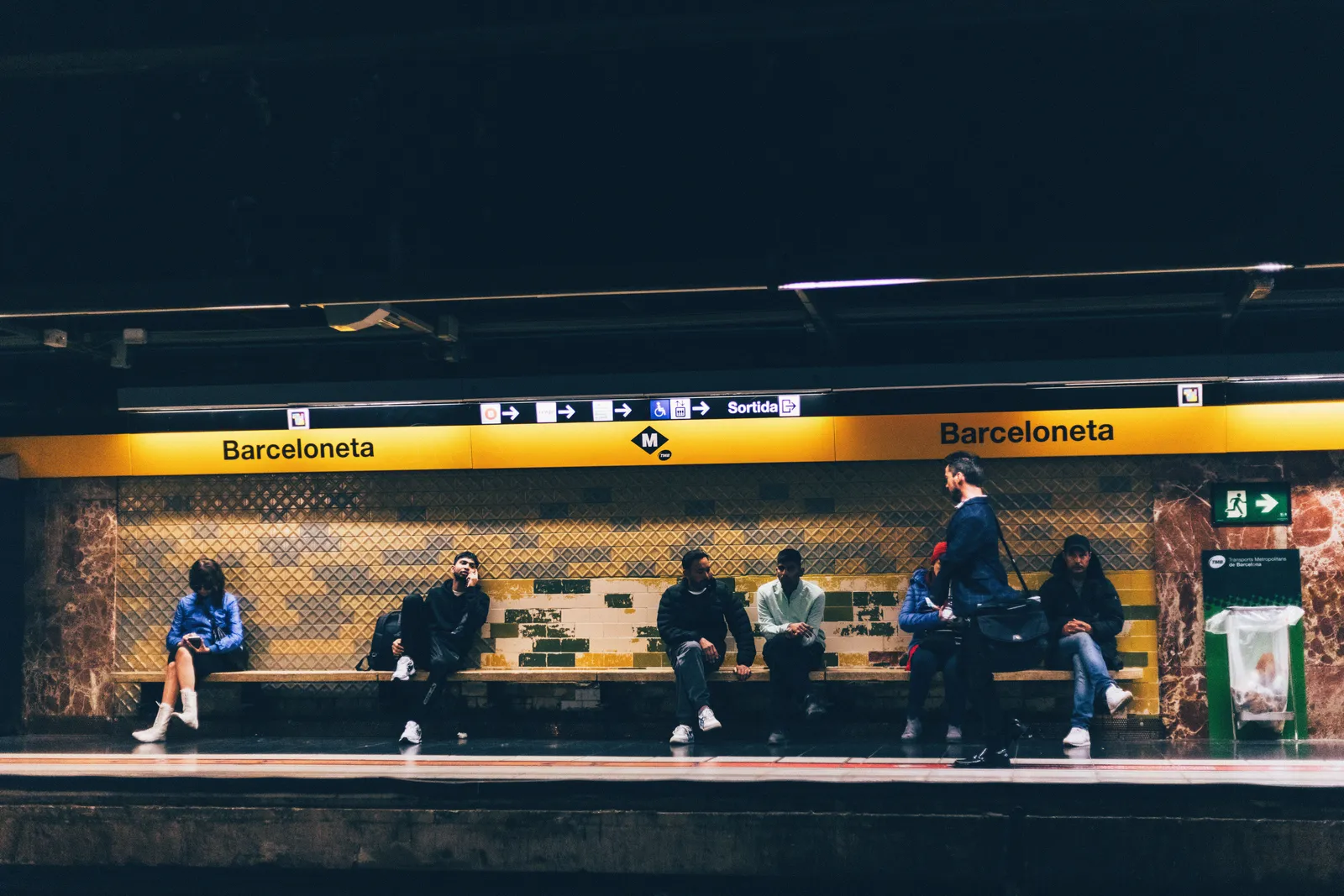
The metro is fast, frequent, clean and simple, with colour-coded lines and clear signs. It runs until midnight on weekdays, later at weekends, and all night on Saturdays. Between the metro and your feet you can reach almost everything, and you will rarely wait more than a few minutes.

Reading the lines and signs
Each line has a number and a colour, and platforms are signed by the name of the last station in the direction you are heading, not by a compass point. So before you go down, note the final station at each end of your line and you will always pick the right platform. Interchanges can involve a decent walk between lines, so allow an extra couple of minutes when you change. Ticket machines and gates take contactless cards and coins, and the machines switch to English with one tap.
Buses, trams and FGC
The metro does most of the work, but the bus network fills the gaps, especially for the seafront and the hilly bits above the Eixample that the metro skirts. The same T-casual works on buses and trams, so there is no separate ticket to buy. The FGC is a second rail network run by the regional government, useful for Tibidabo and a few day trips, and your central-zone ticket covers it within the city.
Accessibility and luggage
Most metro stations have lifts, but not every single one, so if you travel with a pushchair, heavy cases or reduced mobility, check the station in the official transport app before you rely on it. Older stations in the old town are the most likely to have stairs only. Buses are step-free and often the easier option with luggage.
Getting in from the airport
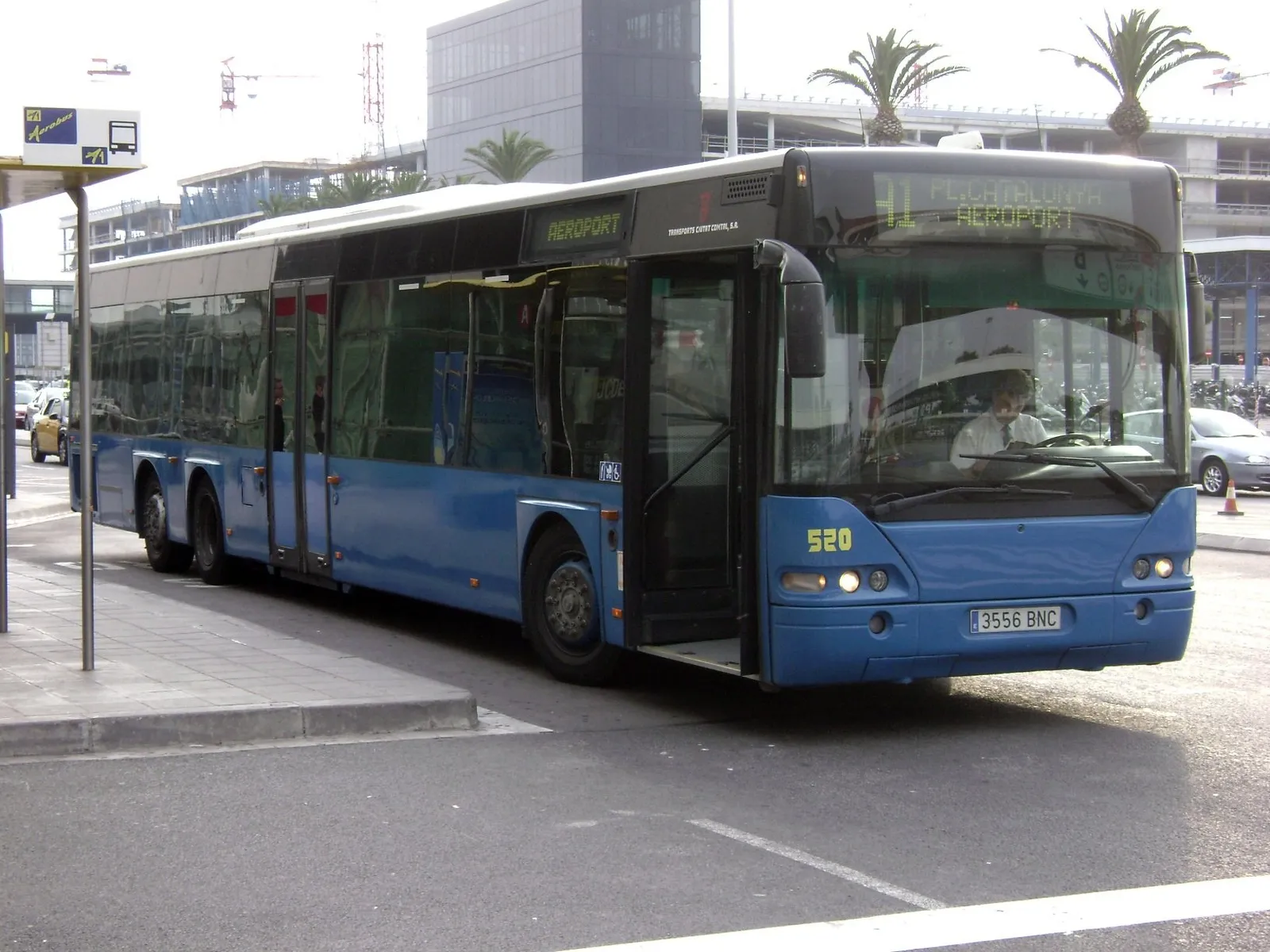
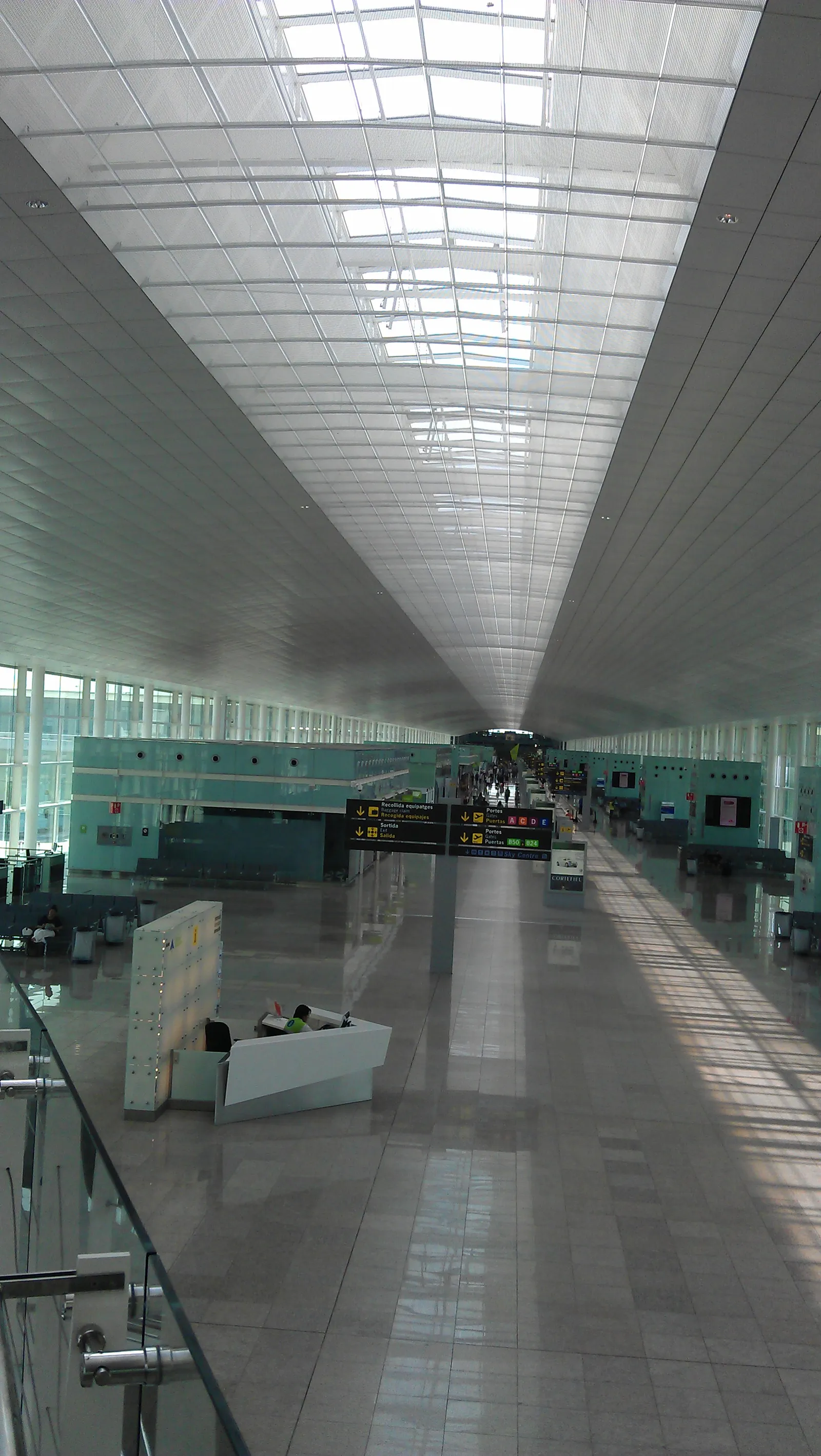
Barcelona’s airport (BCN) sits about 15 km southwest of the centre, and you have three good options. The Aerobús is a frequent express coach to Plaça Catalunya, simple and reasonably priced. The metro (L9 Sud) reaches the city too, but needs a specific airport fare or the Hola Barcelona card. A taxi or ride-hail is worth it for a group or a late arrival. Note that there is no flat airport fare here: the meter runs, with an airport surcharge on top, and most central trips end up somewhere around 35 to 45 euros.
For most people arriving with luggage, the Aerobús is the easy call.
Terminal 1 versus Terminal 2
Both terminals have their own transport links, but they are not next door to each other, so check which one your flight uses before you plan the last leg. A free shuttle bus connects the two, and the Aerobús runs separate services to each. If you land at one and your onward plan assumes the other, you will lose time you did not budget for.
Late arrivals and early departures
The metro and Aerobús do not run through every hour of the night, so a very late landing or a pre-dawn flight can leave you reaching for a taxi whether you planned to or not. There is always a taxi rank outside each terminal. For a full breakdown of every route, times and costs, see our dedicated Barcelona airport transfers guide, which goes deeper than there is room for here.
Walk more than you plan to
Here is the secret locals know: Barcelona is a walking city. The old town, the Born, the waterfront and much of the Eixample are best on foot, and the finest moments happen between the sights, not at them. Save the metro for longer hops, to Park Güell, Montjuïc or the beach, and walk the rest.
The distances are smaller than they look
Plaça Catalunya to the seafront is a pleasant twenty-minute stroll straight down through the old town, and most of the Gothic Quarter is a compact tangle you would not want to cross by metro anyway. The Eixample blocks look long on a map, but the diagonal cut-off corners make junctions quick to cross. Comfortable shoes matter more than a transport pass on most days here.
Land already connectedAn eSIM for Spain, set up before you fly, so maps and tickets just workTaxis, ride-hail and cycling
Barcelona’s black-and-yellow taxis are metered, plentiful and honest by big-city standards, and you can hail one in the street when the green roof light is on. Ride-hail apps operate too, though availability and pricing swing with local rules, so a taxi is often the more reliable bet. There are also official bike lanes threading the city and a public bike scheme, but that scheme is aimed at residents with local registration, so short-stay visitors are better off with a private rental shop for a day’s ride along the seafront.
Staying safe on the move
The transport network is safe, but crowded metro carriages and busy tourist stops are exactly where pickpockets work, so keep bags zipped and in front of you on Line 3 and around Plaça Catalunya in particular. If something does go wrong, our guide to Barcelona emergency numbers covers who to call and how to report a theft for your insurance.
When you need a car
You do not need a car in the city, and parking is a headache. But for the Costa Brava, Montserrat or the wine country, a rental for a day or two opens up places the trains do not reach. Pick it up as you leave town, not for the city itself.
One piece of paperwork to sort before you fly: whether you need an International Driving Permit (IDP). Drivers with US, Australian, Canadian or South African licences should get one, and rental desks in Spain routinely ask non-EU licence holders for it, refusing the car if you turn up without. EU licences need nothing extra, and a UK photocard licence is accepted in Spain for short visits. An IDP is only a translation of your own licence, so carry both, and get it at home: you cannot buy one once you have landed.
Before you drive, check your entry basics
Driving paperwork is separate from the paperwork that lets you into the country in the first place, and the two catch people out for different reasons. Passport and entry rules vary a lot by nationality, and South African passport holders in particular should confirm their position early rather than assume, so read our Barcelona visa and entry guide before you finalise anything.
Common mistakes to avoid
A few habits cost visitors money and time. Buying single tickets one at a time is the biggest, and easiest to fix. Assuming the T-casual gets you in from the airport by metro is another, it does not, you need the airport fare or the Hola Barcelona. People also over-buy multi-day travel cards for trips where they mostly walk, then barely use them. And finally, forgetting to validate, which turns a valid ticket into a fine. Match the ticket to how you will actually move, and you will not overpay.
The short version
Buy a T-casual for a normal trip or the Hola Barcelona if you will ride a lot, take the Aerobús in from the airport, lean on the metro for the long hops and walk everything else. Get online before you land, and leave the car for the day trips.
So here is the question worth asking yourself before you arrive: are you the kind of traveller who wants to ride everywhere, or the kind who would rather wander and let the city unfold on foot? Your answer decides which ticket to buy.