Good news first: for many travelers, entering Spain is one of the easiest parts of a Barcelona trip. If you hold a passport from the EU or one of the many visa-exempt countries, there is no visa to arrange, no form to print, and arrival at Barcelona airport is usually a matter of minutes. But that “if” does a lot of work, because entry rules depend entirely on the passport you carry rather than where you live, and the EU has just switched on a new biometric border. Five minutes here tells you exactly where you stand.
Which group are you in?
Entry to Spain works on three tiers, and everything else in this guide follows from which one applies to your passport.
EU, EEA and Swiss citizens travel freely. A valid passport or national ID card gets you in, there is no day limit for visits, and none of the systems below apply to you.
Visa-exempt nationalities cover roughly 60 countries, including the United States, United Kingdom, Canada, Australia, New Zealand, Japan, South Korea, Singapore, Brazil, Argentina, Mexico and most of Latin America. You do not need a visa for tourism, but your stay is capped at 90 days in any 180 day period, and the EES border checks described below apply to you.
British travelers belong in this group, not the first one. Since Brexit, a UK passport is a non-EU passport at the Spanish border: you use the lanes for third-country nationals, your days count against the same 90 in 180, and the passport validity rules below apply to you in full.
Everyone else needs a Schengen visa issued before travel, applied for at a Spanish consulate or visa center in your country of residence. This catches more readers than people expect: South African passport holders need a Schengen visa for even a short holiday, as do citizens of India, China, Nigeria, Kenya and many other countries. Processing normally takes a couple of weeks but can stretch in high season, so apply one to two months ahead, and note that the appointment itself can be the bottleneck.
Not sure which group you fall into? The Spanish Ministry of Foreign Affairs publishes the current list, and your airline will verify it at check-in anyway.
The 90/180 rule, explained simply
The rule trips up more travelers than any visa does. Visa-exempt visitors get 90 days inside the entire Schengen Area within any rolling 180 day window. Two things matter:
The count is Schengen-wide, not per country. A month in France followed by a month in Italy leaves you only 30 days for Spain within that window. And the window rolls: on any given day, look back 180 days and add up every day you were inside Schengen. For a normal one or two week Barcelona holiday you will never get close, but long-stay travelers, remote workers and Europe-hoppers should run their dates through a Schengen calculator before booking. Overstays are taken seriously and can mean fines and future entry bans.

EES: the new biometric border
The EU Entry/Exit System (EES) has replaced the old passport stamp for non-EU travelers. Instead of ink, your entry and exit are logged digitally along with a facial photo and fingerprints. It was introduced gradually from October 2025 and has been fully operational across the Schengen area since 10 April 2026, Barcelona El Prat included.
What it means in practice: on your first crossing under the system, expect a few extra minutes at a self-service kiosk or a staffed booth while your biometrics are registered. On later trips the process is quicker, since the system already knows you. There is no fee and nothing to do in advance. The practical upside is that the 90/180 count becomes automatic, so keep your own tally honest.
ETIAS: still not in force, and no date to plan around
ETIAS (European Travel Information and Authorisation System) is the EU’s planned pre-travel authorization for visa-exempt visitors, comparable to the US ESTA or Canada’s eTA. When it eventually starts you will apply online, pay a fee of around 20 EUR (with under-18s and over-70s exempt), and receive an authorization valid for three years or until your passport expires.
Here is the part worth being straight about: ETIAS is not in force, and there is currently no confirmed launch date. The timeline has slipped repeatedly, and the EU has removed the target it previously advertised rather than replacing it with a new one. So there is nothing to buy, nothing to apply for, and no reason to pay one of the lookalike sites that will happily sell you an “ETIAS” today. Simply check the official EU pages a few weeks before you fly, and if it has gone live by then, apply directly and only through the official channel.
Passport validity and paperwork
Whatever your nationality, check two numbers on your passport before booking. It must be valid for at least three months beyond your planned departure from Schengen, and it must have been issued within the past ten years. Airlines enforce both at check-in, and a renewal takes far longer than a holiday.
Border officers can also ask non-EU arrivals for a return or onward ticket, proof of accommodation and proof of funds. In practice, arrivals at BCN are rarely asked for anything, but keep your bookings accessible on your phone. Travel insurance is not checked for visa-exempt visitors, though it is genuinely worth having; those applying for a Schengen visa must show a policy with at least 30,000 EUR of medical cover.
What arrival at BCN actually looks like
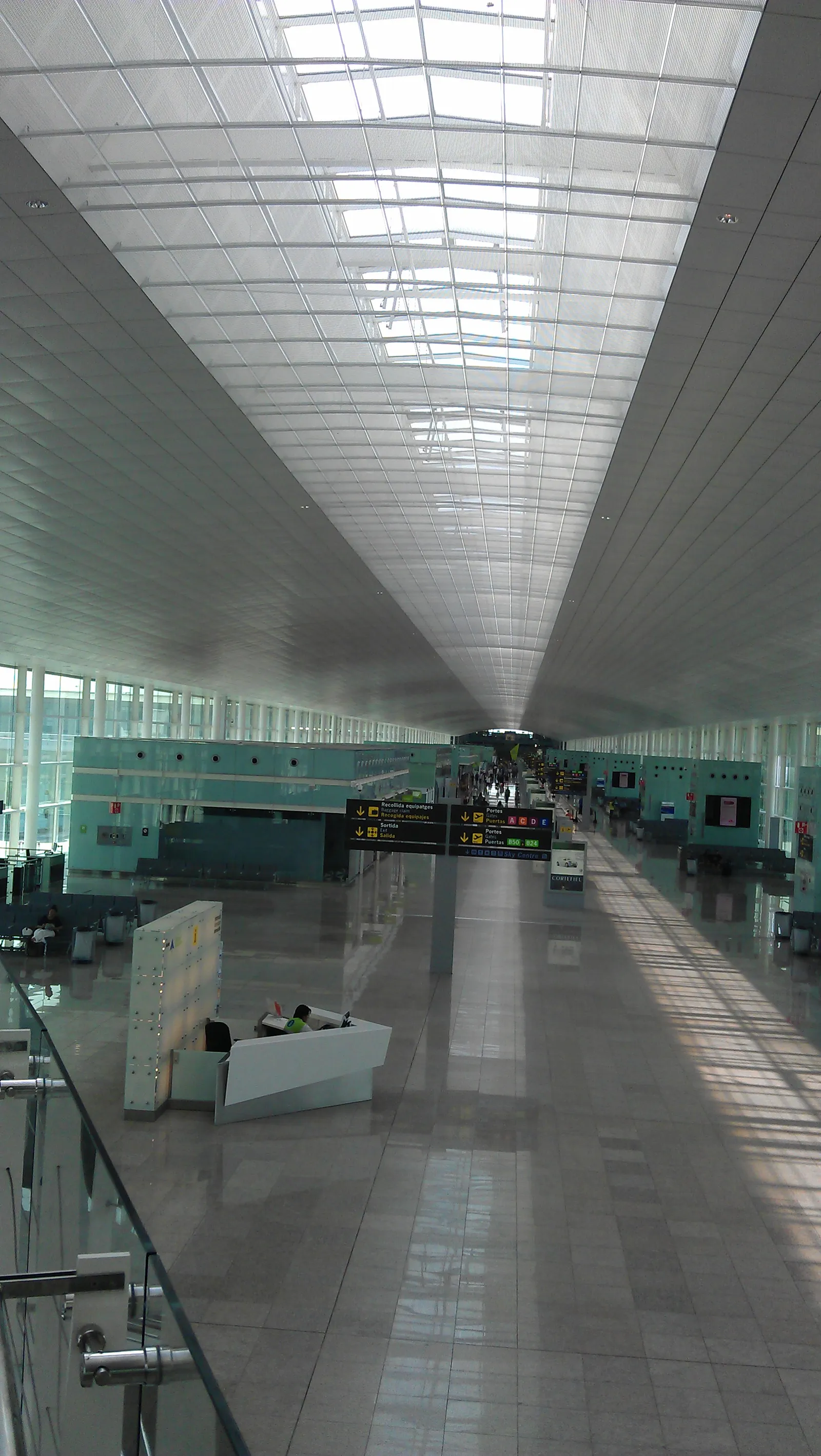
Barcelona El Prat (BCN) is a big, modern, well-signed airport, and immigration is usually painless. Flights from inside Schengen arrive with no passport control at all, like a domestic flight. Flights from outside Schengen route you through border control, where EU citizens use e-gates and everyone else queues for the kiosks and booths. At busy times, expect 15 to 45 minutes.
Here is the entry picture at a glance:
| Traveler | Visa needed? | Day limit | EES biometrics | ETIAS |
|---|---|---|---|---|
| EU / EEA / Swiss | No | None | No | No |
| Visa-exempt (US, UK, Canada, Australia, New Zealand and about 60 others) | No | 90 in 180 | Yes | Not yet in force |
| South Africa, India, China and other non-exempt nationalities | Schengen visa in advance | Per visa | Yes | No (visa instead) |
Once you are through, there is no customs form for normal luggage, and the city is 25 to 40 minutes away by bus, train, metro or taxi. Our getting around Barcelona guide covers the airport options and which transit ticket to buy.

The short version
EU passport: just show up. Visa-exempt passport, British ones included: no visa, watch the 90/180 count, expect quick biometrics under EES, and ignore anyone selling you an ETIAS, because it does not exist yet. South African and other non-exempt passports: arrange a Schengen visa well ahead, and start early. Make sure your passport has three months of validity beyond your trip and is under ten years old, keep bookings on your phone, and the border will be the least memorable part of your trip. Then the good part starts: see our first-timer guide and budget breakdown for what comes after the arrivals hall.